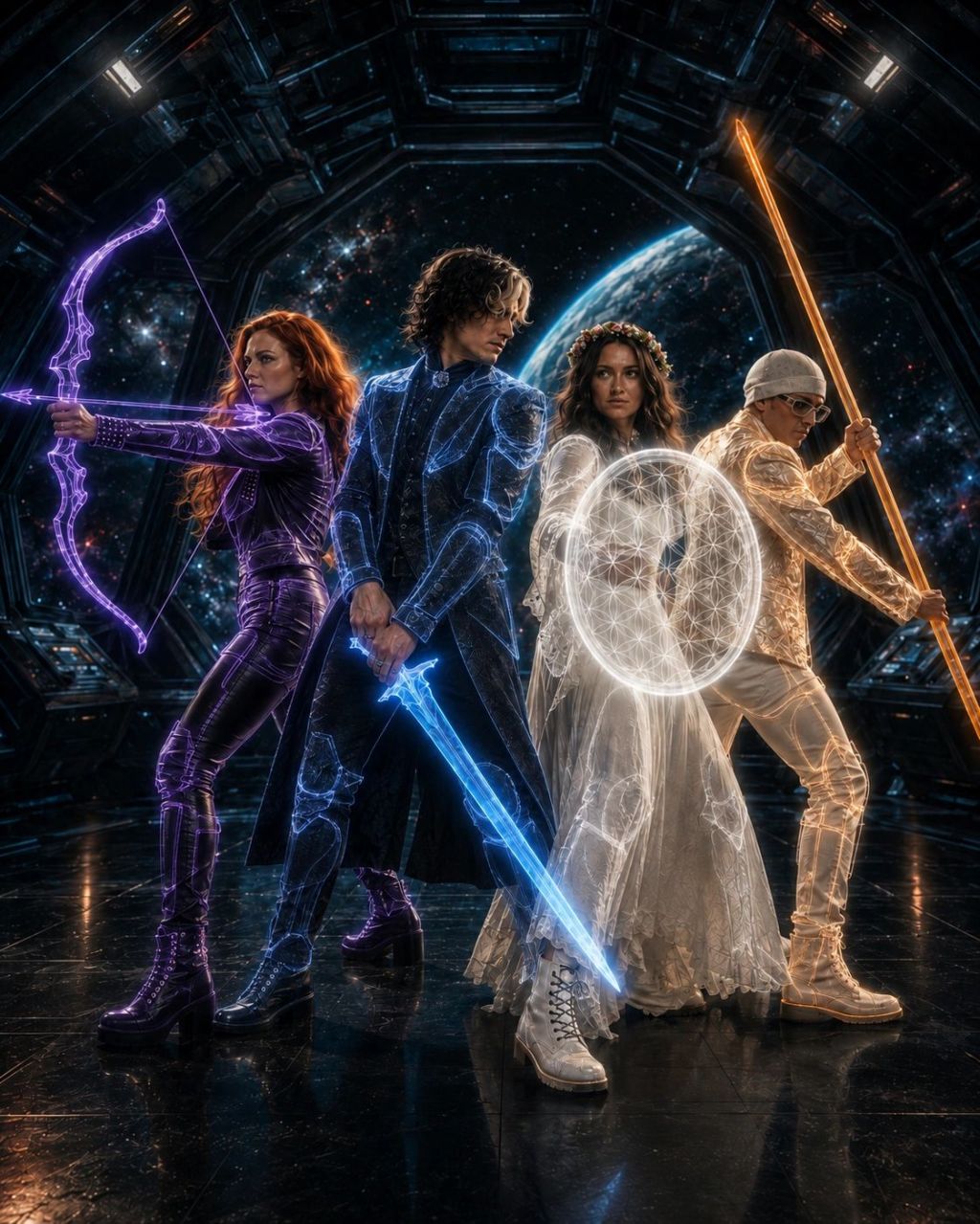
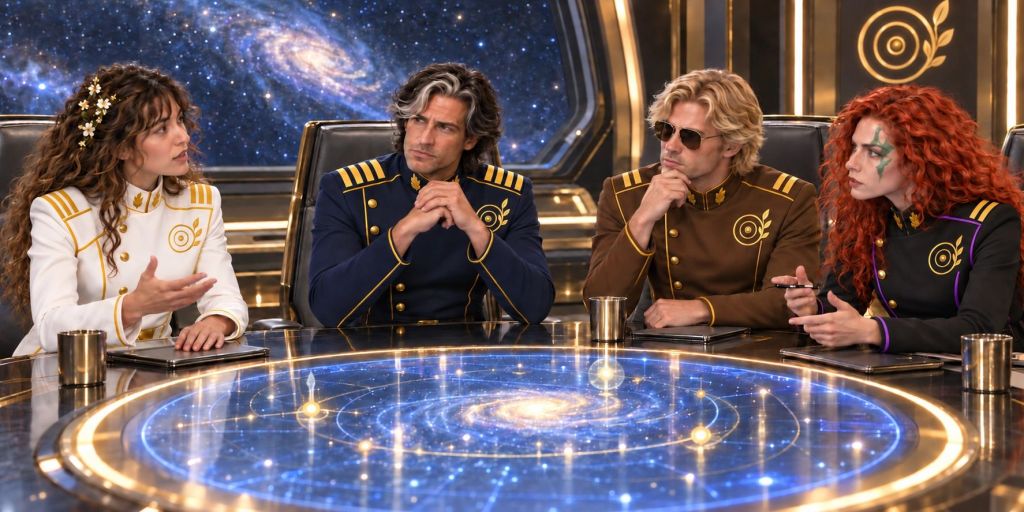
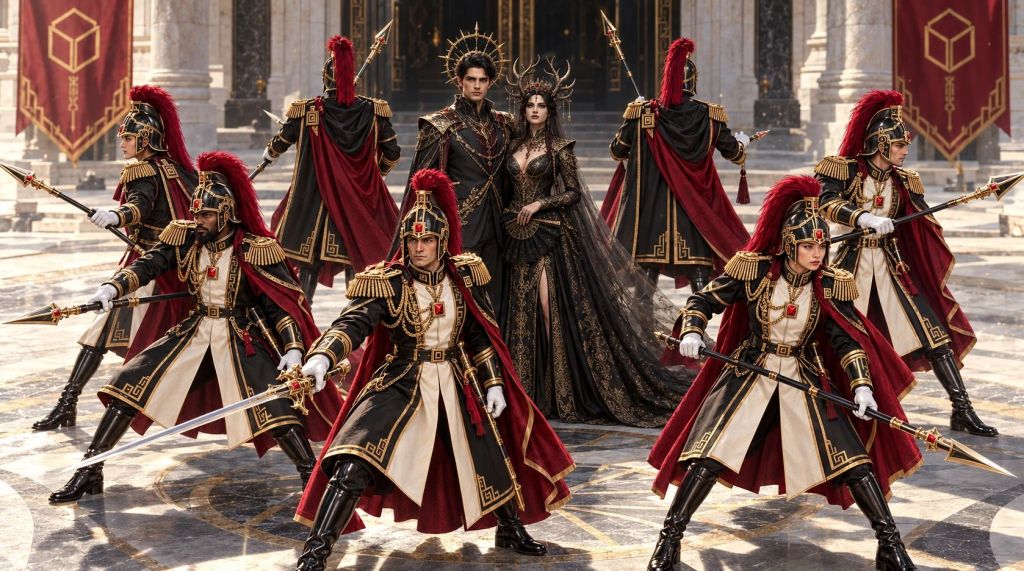
The story is the treasure. The rules are only the road.
How do you make a tabletop roleplaying game simple enough to begin in minutes, yet flexible enough to tell stories across thousands of years? Captain Plum spent much of 2025 and 2026 pursuing that question. The result is SPARK RPG: a developing, card-based game about courage, curiosity, friendship and the responsibilities of power.
A different idea of heroism
Many roleplaying games reward defeating enemies and collecting treasure. SPARK has enemies and dangers too, but asks an additional question: who benefits from the hero’s power? In the Vitaverse, the Star Concord seeks to protect conscious beings, not claim ownership over them. Its promise is simple: No Spark is cargo. No angel is property. A heroic choice might be to fight, negotiate, investigate, mend a machine or help a frightened stranger.
From twelve archetypes to three simple classes
The early 2025 designs imagined twelve heroic archetypes drawn from patterns recurring across myth, adventure and science fiction. Later iterations grouped those heroes into three broad approaches: Defenders protect, Benders alter possibilities, and Menders restore and inspire. Four archetypes live within each class. The same heroic pattern can appear in the fantasy of Mythos, the upheavals of Wildfire, or the far future of the Holy Fleet.
These classes describe a character’s strengths, not the limits of their humanity. A Defender can reason. A Bender can comfort. A Mender can fight. Nobody needs permission from a character sheet to care about another being.
Body, Mind, Soul—and nine actions
SPARK gradually simplified its mechanics around three attributes: Body, Mind and Soul. Each supports three universal actions. Body has Strike, Move and Endure. Mind has Perceive, Recall and Solve. Soul has Inspire, Channel and Resist.
Want to climb a cliff? Move. Decipher an alien message? Solve. Give someone courage? Inspire. The player describes the intention; the Guide judges the situation; the rules resolve what is uncertain. The ideal is that a new player can understand the basic language of the game without memorizing an encyclopedia.
Why cards instead of dice?
A standard deck is familiar, cheap and visual. The design went through several experiments, including early two-card systems, before the October 2026 Cards of Fate. In the current Levels 1–3 playtest guide, black numbered cards carry their printed value and red numbered cards add ten. That card value joins the relevant character bonuses and is compared with a target set by the Guide.
Cards also have suits, patterns and the practical advantage of being dealt openly for several challenges at once. The intent was never to introduce a complicated novelty. It was to make randomness quick, legible and something players could see on the table. Earlier card experiments belong to the game’s history, not automatically to its current rules.
A Guide who plays jazz
A good Guide does not need to predict everything the players will do. The Guide creates a believable situation, listens to unexpected ideas and improvises the consequences. Suppose a damaged probe has attached itself to a ship. Players may capture it, repair it, question it, flee it or imagine a completely surprising solution. SPARK should support that inventiveness rather than force everyone down one approved route.
That is why the design repeatedly returned to fewer abilities, simpler character creation and less bookkeeping. The fewer seconds spent searching a rulebook, the more time available for the adventure.
A living game, not a finished monument
The archive records an evolving design: twelve archetypes in 2025, experiments with playing cards, the refinement of three core classes during 2026, and a working third-edition playtest. Today’s SPARK RPG page hosts the illustrated Levels 1–3 playtest rules. They remain a playtest, and feedback from real adventures matters more than grand declarations about elegance.
The ambition has stayed remarkably consistent: a small set of rules capable of supporting enormous imaginative freedom, with room for humour, moral choices and the possibility that saving somebody is a greater victory than defeating them.
A few friends. A deck of cards. A world that needs help. Draw, choose, and discover what happens.
The story is the treasure. The rules are only the road.
Chorus wore the small velvet cape she used for gaming.
“No?” Chorus asked.
“No SPARK RPG tonight.”
“But we are ready,” she said.
“I am not.”
Paddy held up his dice.
“You don’t have to play, sir. Just run the entire universe.”
“That is the part I cannot do.”
Maddie looked at Romeo’s notes.
“You have already designed three planets.”
“Yes.”
“Two political systems.”
“Yes.”
“A ruined temple containing a dormant artificial intelligence.”
“Yes.”
“So what remains?”
“The people. Their histories. The economy. The weather. The temple’s security system. The artificial intelligence’s motives. And an explanation for why Paddy destroyed the bridge last week.”
“It looked unstable.”
“It became unstable after you struck it with a plasma hammer.”
“Professional assessment confirmed.”
Romeo picked up his coffee.
“We are playing something that does not require me to create a civilization.”
Paddy stood.
“I have just the thing.”
Romeo looked suspicious.
“Does it contain dice?”
“No.”
“Character sheets?”
“No.”
“Explosives?”
“Not officially.”
Maddie frowned.
“What does that mean?”
Paddy pulled a rectangular box from behind the sofa.
TWISTER.
Chorus studied the picture.
“Those humans appear to be physically entangled.”
“That’s the game, duckie.”
“Why?”
“To win.”
Maddie took the box from him and read the rules.
“This is extremely simple.”
“Exactly.”
“There is no strategy beyond balance and placement.”
“Exactly.”
“There are only four colours.”
“Now you’re getting it.”
Chorus looked at the picture again.
“The postures are elegant.”
Paddy smiled.
“My angel, you were made for this.”
Romeo examined the spinner.
“And what do I do?”
“You spin that and call out hands and feet.”
“I remain seated?”
“The whole game.”
Romeo settled into his chair.
“Twister has already surpassed SPARK RPG.”
Paddy spread the mat across the living-room floor.
Maddie removed her socks.
Paddy stretched his shoulders.
Chorus lifted one foot behind her and held it with perfect grace.
Maddie stared.
“What are you doing?”
“Preparing my body.”
Paddy nodded approvingly.
“She’s an athlete.”
“She is standing on one leg.”
“Can you do it?”
Maddie immediately stood on one leg.
“I can do it.”
Chorus released her foot.
Maddie remained standing.
“You may stop,” Chorus said.
“I know.”
“You are still doing it.”
“I am demonstrating control.”
Paddy stepped onto the mat.
“Save it for the game, maid.”
Romeo spun.
“Right hand, red.”
All three placed their hands on red circles.
“Left foot, green.”
They moved.
“Right foot, blue.”
Paddy crossed easily.
Chorus moved into a smooth arch.
Maddie studied the circles before choosing one.
Paddy looked at her.
“You planning a bridge?”
“I am calculating future access.”
“It’s coloured dots.”
“Which occupy fixed positions.”
Romeo spun again.
“Left hand, yellow.”
Chorus turned beneath her own arm and settled into a pose that looked like ceremonial dance.
Paddy stared.
“How’d you do that?”
“I followed the instruction.”
“Look at her. Beautiful.”
“It is efficient,” Maddie said.
“You mean beautiful.”
“I mean mechanically stable.”
“Beauty frightens Mind.”
“Gravity frightens Body, Paddy. You simply haven’t met enough of it.”
Romeo spun.
“Right foot, red.”
Paddy swung his leg over Maddie’s back and landed perfectly.
Maddie looked up at him.
“Was that necessary?”
“No. But it was impressive.”
“It was reckless.”
“Still here.”
Chorus tilted her head while holding herself between four circles.
“I understand the game now.”
“Do you?” Romeo asked.
“Yes. We are creating one structure from three bodies.”
Paddy smiled.
“There you go.”
Maddie adjusted her hand.
“We are three competing structures occupying limited space.”
“There she goes,” Paddy said.
Romeo spun again.
“Left foot, blue.”
Everyone moved.
Paddy ended up bent over directly in front of Chorus.
His backside was less than a hand’s width from her face.
Chorus froze.
“Paddy?”
“Yes, duckie?”
“I do not recall the safe word.”
Romeo stopped holding the spinner.
Maddie looked over.
Chorus continued:
“I do not like this.”
Paddy moved immediately.
He lifted his hands from the mat and stepped away.
“Game stopped.”
“You have been eliminated,” Maddie said.
“Don’t care.”
He turned to Chorus.
“You all right, my angel?”
“Yes. I did not enjoy that position.”
“Fair enough. You never have to stay in a game when you want out.”
“But you were winning.”
“Then I stopped while winning. Makes me look even better.”
Chorus smiled.
“Thank you.”
Paddy bowed.
“Consent outranks Twister.”
Romeo set down the spinner.
“That may be the wisest sentence ever spoken in this apartment.”
Maddie remained twisted across three colours.
“Can the game continue? My left hip is approaching its operational limit.”
Chorus looked at Paddy.
“I wish to continue.”
“You sure?”
“Yes. Your bottom is no longer in my face.”
“Excellent safety standard.”
Paddy stepped off the mat and picked up the spinner.
“My turn to command.”
Romeo handed it over.
“Enjoy power while it lasts.”
Paddy spun.
“Right hand, blue.”
Maddie and Chorus moved.
Chorus’s hair fell across Maddie’s shoulder.
Maddie’s knee rested beside Chorus’s elbow.
For several turns, both performed surprisingly well.
Maddie’s balance came from careful planning. She kept her centre of gravity low and never moved until she had selected the safest circle.
Chorus flowed between positions as though the coloured mat were teaching her a dance.
“Left hand, green,” Paddy called.
They moved again.
Chorus’s hand landed beside Maddie’s face.
Her index finger pointed directly toward Maddie’s nose.
Maddie’s eyes widened.
The finger had history.
It had produced sounds no finger should produce and smells no android engineer had adequately explained.
Maddie held perfectly still.
“Paddy.”
“What?”
“Spin the thing.”
“I just spun it.”
“Spin it again.”
“Got to admire the position first.”
“Paddy.”
“You’re doing excellent, maid.”
“People play this? Good God, Paddy, spin the thing. I need to move now.”
Chorus looked at her finger.
“My digestive simulation is not active.”
“That finger has defeated engineering before.”
“It was one incident.”
“It was a campaign.”
Paddy laughed so hard he dropped the spinner.
“Pick it up!” Maddie shouted.
“Can’t. I’m weak.”
“Romeo!”
Romeo calmly retrieved it.
“Left hand, yellow.”
Maddie moved with such speed that her right leg slipped.
She fell sideways, caught Paddy around the knees and pulled him down with her.
Paddy landed on the edge of the mat.
Chorus remained balanced above them.
Nobody moved.
Romeo looked at the arrangement.
“It resembles a furniture accident.”
“I am still standing,” Chorus said.
“You win,” Maddie muttered from beneath Paddy’s arm.
Paddy raised his head.
“Technically, I was already eliminated.”
“You returned to the playing area.”
“Only because you assaulted my legs.”
“I was escaping the finger.”
Chorus lowered herself carefully and sat on the mat.
“Did I win through elegance?”
“You won because the rest of us collapsed,” Maddie said.
“Many victories occur that way,” Romeo replied.
Paddy rolled onto his back.
“Good game.”
“My face was threatened twice,” Maddie said.
“But never touched.”
“That is not the standard.”
Chorus examined the coloured circles.
“I liked it.”
Maddie stared at her.
“You spent part of the game behind Paddy’s backside.”
“I liked the other parts.”
Paddy placed a hand over his heart.
“A fair review.”
Chorus looked at him.
“You stopped immediately.”
“Of course.”
“Some people might have told me I was being foolish.”
“Then some people shouldn’t be invited to game night.”
Romeo nodded.
“A game remains a game only while everyone agrees to play.”
Maddie sat up.
“The design is more interesting than I expected.”
Paddy grinned.
“You liked it.”
“I appreciated the simple premise and the balance challenge.”
“You liked it.”
“I did not say that.”
“You shouted with passion.”
“I was in danger.”
“From a finger.”
“An experienced finger.”
Chorus hid her index finger behind her back.
Maddie saw her do it.
“Thank you.”
Chorus giggled.
Paddy began folding the mat.
“Next game?”
Maddie stood and straightened her clothes.
“Yes.”
“What have you got?”
She walked to the cupboard and removed a large box.
RISK.
Romeo looked at it.
“No.”
Maddie placed it on the table.
“It is a simple strategy game.”
Paddy sat up.
“You said Twister was simple.”
“It was.”
“I saw my life twice.”
Chorus studied the map of the world.
“This seems adversarial.”
Maddie began arranging the armies by colour.
“It is merely strategic.”
Romeo watched her smile.
It was not a comforting smile.
Paddy noticed too.
“Should’ve stuck with the arse game,” he whispered.
Chorus nodded.
“It had clearer boundaries.”
Game Night, Part Two: Maddie’s Game
Maddie placed the Risk board on the table.
The world unfolded in front of them.
Paddy studied it.
“Bit small.”
“It is a map,” Maddie said.
“I know. Still small.”
Chorus examined the coloured territories.
“Why has the world been divided?”
“For the game.”
“Did the people living there agree?”
“There are no people living there.”
“Then why do we want it?”
Maddie began sorting the tiny armies.
“To win.”
Chorus looked at Paddy.
“This seems adversarial.”
“So was Twister,” Maddie said.
“Twister was intimate.”
Paddy nodded.
“At times, too intimate.”
Maddie gave them both a warning look.
“This is a simple strategy game. Each player controls territories, moves armies and tries to take over the world.”
Chorus stopped sorting.
“The entire world?”
“Yes.”
“Why?”
“To win.”
“You already said that.”
“The answer remains correct.”
Chorus examined a tiny red soldier.
“This person has no face.”
“It is plastic.”
“He is going to war without a face.”
“There are no individual soldiers.”
“Then why are they shaped like people?”
Maddie looked at Romeo.
“Can you help?”
Romeo sat at the end of the table with the rulebook.
“No. I have decided to enjoy this.”
Paddy selected green.
“Green for the Newfoundland forests.”
“You do not control Newfoundland,” Maddie said.
“Yet.”
Chorus selected yellow because it reminded her of sunlight.
Maddie selected black.
Paddy stared at her pieces.
“Bit on the nose, maid.”
“It is the most visible colour against the board.”
“Empress of Darkness begins.”
Romeo dealt the territory cards.
Paddy received most of Australia and part of Asia.
Chorus received scattered territories across several continents.
Maddie received enough of Europe to develop ambitions immediately.
She placed her armies with great care.
Paddy put nearly all of his in Australia.
“You need to defend your other territories,” Maddie said.
“They’re on their own.”
“You cannot abandon them.”
“Watch me.”
“You will lose them.”
“Aye.”
“Then why possess them?”
“I don’t.”
“You have cards saying you do.”
“Temporary administrative confusion.”
Chorus spread her armies evenly.
“I do not want any territory to feel less protected.”
“That is strategically unsound,” Maddie said.
“It is emotionally consistent.”
Paddy nodded.
“Good leadership.”
Maddie looked at Romeo.
“I am playing against madness.”
“You selected the game,” he reminded her.
The first turns were peaceful.
Chorus refused to attack anyone.
Paddy conquered the remaining Australian territories and stopped.
Maddie seized most of Europe.
“You may attack now,” she told Chorus.
“I may.”
“That is the purpose.”
“I decline.”
“You cannot win without attacking.”
“I have many territories.”
“You need all of them.”
“Why?”
Maddie looked across the table.
“Is this question going to continue all evening?”
“Yes,” Chorus said.
Paddy reinforced Western Australia.
Maddie pointed at him.
“You have five armies there. Nobody is attacking Western Australia.”
“Exactly.”
“That is not why nobody is attacking.”
“System works.”
Maddie took her turn.
She rolled three dice.
Paddy watched several yellow armies disappear from the board.
“What happened there?”
“I took Chorus’s territory.”
Chorus stared at the empty space.
“You invaded me.”
“It is part of the game.”
“We had peace.”
“We had not established an alliance.”
“We were friends.”
“That exists outside the game.”
Chorus looked wounded.
Paddy leaned toward Maddie.
“Cold, maid.”
“This is war, Chorus.”
“No, Maddie. This is cardboard.”
Romeo coughed into his hand.
Maddie glared at him.
“Are you laughing?”
“No.”
“You are.”
“I was impressed by her geopolitical analysis.”
Chorus took her turn. Instead of attacking Maddie, she moved several armies beside Paddy’s territory.
Paddy looked concerned.
“Planning something, duckie?”
“They are humanitarian observers.”
“That is not a game function,” Maddie said.
“They are watching Australia.”
“For what?”
“To ensure Paddy remains safe.”
Paddy placed a hand over his heart.
“International friendship.”
“They cannot enter Australia without attacking it,” Maddie said.
“I will permit them peaceful entry,” Paddy replied.
“There is no peaceful entry.”
“That’s a flaw in the rules.”
“The game is called Risk, not International Friendship.”
“Could use an expansion.”
Maddie continued across Europe and into Asia.
She offered Chorus an alliance.
“For three turns, we will not attack each other.”
Chorus considered.
“Can we also reduce our armies?”
“No.”
“Can we return captured territories?”
“No.”
“Can we use the three turns to negotiate permanent peace?”
“No.”
“Then what is the alliance for?”
“So I can attack Paddy.”
Paddy looked up.
“Excuse me?”
“You are becoming strategically inconvenient.”
“I’m in Australia.”
“You control a continent.”
“Lovely spot.”
“It gives you extra armies every turn.”
“I put them in Western Australia.”
“I know.”
“Good people there.”
Maddie drew a breath.
“Chorus, do we have an alliance?”
“Yes. But I do not like its purpose.”
“Accepted.”
Maddie attacked Paddy through Indonesia.
Paddy rolled his dice.
Maddie lost.
She attacked again.
She lost again.
Paddy stared at his dice.
“Strong little fellas.”
Maddie attacked a third time.
Paddy won again.
“Border’s closed, maid.”
“That was improbable.”
“Immigration’s strict tonight.”
“It will not happen again.”
It happened again.
Paddy added more armies to Australia.
Maddie’s eye began to twitch.
Chorus noticed.
“Your face is moving.”
“I am thinking.”
“It is thinking visibly.”
Maddie turned to Chorus.
“You should attack North America.”
“I do not wish to.”
“You need cards.”
“I have cards.”
“You need better cards.”
“My cards have pictures of horses.”
“They are cavalry.”
“I like them.”
Maddie leaned back.
“You cannot collect armies based on affection for the pictures.”
“I already have.”
Romeo turned a page in the rulebook.
“Her interpretation appears legal.”
“Stop helping her.”
“I am the neutral administrator.”
“You are enjoying my suffering.”
“I can perform two roles.”
Maddie expanded into Africa.
Chorus objected.
“You promised not to attack me.”
“The agreement was for three turns.”
“That was two.”
“No. You completed three turns.”
“My second turn consisted entirely of asking whether Paddy needed aid.”
“It still counts.”
“You used the wording against me.”
“This is war.”
“This is cardboard,” Paddy and Chorus said together.
Maddie conquered three of Chorus’s territories.
Chorus folded her arms.
“I do not like war.”
“You agreed to play Risk.”
“I believed the risk was that we might lose.”
“That is the risk.”
“No. The risk is that you become unpleasant.”
Paddy looked at Romeo.
“She has a point, sir.”
“Noted.”
Maddie now controlled Europe, Africa and much of Asia.
She leaned over the board like an empress surveying conquered lands.
“Your position is unsustainable,” she told Paddy.
Paddy looked at his green armies.
“Seems stable.”
“You possess one continent.”
“One more than I need.”
“The objective is global control.”
“Not my objective.”
“You cannot invent a different objective.”
“Already did.”
“What is it?”
“Stay in Australia. Keep the peace. Have a few beers.”
“Your armies cannot drink beer.”
“Morale problem.”
Chorus began returning her own captured pieces to the board.
Maddie saw her.
“What are you doing?”
“Restoring displaced populations.”
“You cannot do that.”
“They were removed without consultation.”
“That is how conquest works.”
“Then conquest is poorly designed.”
Maddie took the yellow pieces away again.
Chorus placed them back.
“Romeo.”
He looked up.
“Yes?”
“She is violating the rules.”
Chorus held a tiny soldier protectively.
“He has no face.”
“He also has no rights.”
Chorus gasped.
Paddy pointed at Maddie.
“There it is. Tyranny.”
“I meant within the game!”
“Tyrants always clarify after.”
Maddie turned back to Australia.
“Fine. I will end this.”
She moved a vast army into Indonesia.
Paddy reinforced the border.
“Come ahead, maid.”
She rolled.
He rolled.
Maddie lost two armies.
She rolled again.
She lost two more.
She attacked again.
Nothing changed.
The battle continued.
Her armies vanished in waves.
Paddy’s little green defenders remained.
“This is statistically absurd,” Maddie said.
“Natural fortress.”
“It is dice.”
“Supported by character.”
“You have no strategy.”
“I have Australia.”
“That is not a strategy.”
“It keeps beating yours.”
Chorus began cheering for Paddy.
Maddie looked at her.
“We had an alliance.”
“You broke it.”
“The agreed period ended.”
“My feelings did not.”
Paddy rolled again.
Another black army disappeared.
“Hold the line, ’bys!”
“They are plastic!” Maddie shouted.
“Plastic with purpose.”
Finally, Maddie stopped attacking.
She still controlled most of the world.
Paddy still held Australia.
Chorus controlled a few scattered territories that she had renamed Peace Stations.
Romeo looked at the board.
“Technically, Maddie is winning.”
“Technically?” she said. “I control four continents.”
“Paddy appears happier.”
“That is not part of the score.”
“Should be,” Paddy said.
Chorus looked at Maddie.
“Are you enjoying your victory?”
“I have not achieved victory.”
“Because Paddy has Australia?”
“Yes.”
“Why do you need his part?”
“Because it is there.”
Paddy nodded.
“That’s the imperial spirit.”
Maddie stared at him.
“You did almost nothing.”
“Defended home.”
“You abandoned every other territory.”
“Too much travel.”
“You made no alliances.”
“Didn’t break any either.”
“You have shown no ambition.”
“Exactly.”
Maddie looked down at the world she had nearly conquered.
Paddy leaned back with his hands behind his head.
She could defeat armies.
She could break alliances.
She could control continents.
She could not conquer someone who did not want what she was offering.
“What do you call this strategy?” Romeo asked.
Paddy considered.
“Enough.”
Chorus smiled.
“That is a good strategy.”
“It is not a strategy,” Maddie said.
“You’re still not in Australia.”
Maddie began putting the pieces back in the box with unnecessary force.
Paddy lifted his remaining army.
“Should we have a victory parade?”
“You did not win.”
“Didn’t lose.”
“You cannot declare victory because you survived.”
“History disagrees.”
Chorus rescued several yellow soldiers from the box and arranged them beside Paddy’s green ones.
“They are celebrating peace.”
“There was no peace,” Maddie said. “There was a prolonged military stalemate.”
“With snacks,” Paddy added.
Romeo closed the rulebook.
“What did we learn?”
“That Australia is unconquerable,” Paddy said.
“That war turns friends into enemies,” Chorus said.
“That probability is a cruel and unreliable mechanism,” Maddie said.
Romeo looked at the board.
“Mind believed the purpose was to own everything. Body found one safe place and defended it. Soul refused to believe that friendship ended when the rules said war began.”
Maddie paused.
“And Will?”
“Will has decided we are finished.”
Paddy saluted.
“Strong leadership.”
Chorus reached beneath the table and produced a small box.
“My game is next.”
Maddie read the label.
CHARADES.
“There are no rules,” Chorus said happily. “We will communicate through movement and understanding.”
Paddy stood.
“My kind of game.”
Maddie looked suspicious.
“What categories?”
“Life.”
“That is not a category.”
“It is the largest category.”
Romeo rose to make more coffee.
“How long can charades possibly take?”
The three androids looked at him.
Romeo stopped.
“That was foolish.”
Chorus selected the first card and smiled.
Maddie watched her begin an elaborate series of gestures.
“What is she doing?”
Paddy leaned forward.
“Could be a tree.”
Chorus pointed urgently at her heart, pretended to drown and then spread her arms like wings.
Maddie frowned.
“Maritime spiritual transformation?”
Chorus shook her head.
Paddy snapped his fingers.
“Woman falls in love with a boat!”
Romeo looked at the answer.
“Titanic.”
Chorus pointed at him with delight.
Maddie closed her eyes.
“I preferred war.”
Game Night, Part Three: Chorus’s Game
Chorus placed the charades cards in the middle of the table.
“The rules are simple,” she said. “One Spark communicates an idea without speaking. The others attempt to understand.”
Maddie examined the cards.
“What categories?”
“Life.”
“That is not a category.”
“It contains all categories.”
“That makes it useless as a category.”
Paddy sat on the edge of the sofa.
“I understand the game. Get up, act foolish, people shout at you.”
“You may not make sounds,” Chorus said.
Paddy looked alarmed.
“None?”
“None.”
“What if the sound is part of the gesture?”
“Then it is a sound.”
“What if I breathe dramatically?”
Maddie shook her head.
“No.”
“Sigh?”
“No.”
“Grunt?”
“No.”
“Bit restrictive.”
Romeo sat in his chair with fresh coffee.
“You must communicate like the humans do.”
Paddy pointed at him.
“Humans make sounds, sir. Constantly.”
“For charades, they use gestures.”
Chorus nodded.
“No speaking. No written words. No removing limbs.”
Paddy slowly turned toward her.
“That was going to be a rule?”
“We can remove them.”
“I know you can remove them. Why would you?”
“If the answer were arm.”
Maddie held up a finger.
“No using holoskins either. You cannot become the thing.”
“What if the answer is horse?” Paddy asked.
“You pretend to be a horse.”
“Can’t Chorus just display one?”
“No. Gestures only.”
“Like the humans do,” Chorus said.
Maddie nodded.
“And no fingers can be removed.”
Chorus looked at her.
“It was one time.”
Paddy smiled.
“It is affection, Chorus. Ribbing.”
Chorus considered the term.
Then she laughed.
“Maddie is ribbing me.”
“I am establishing a rule.”
“You are doing it again.”
Maddie sighed.
Chorus laughed harder.
Paddy wiped an imaginary tear from his eye.
“She’s learned banter. Proud day.”
“I understood banter before.”
“Not like that, my angel.”
Chorus selected the first card.
She read it and smiled.
Then she stood before them.
She held up two fingers.
“Two words,” Maddie said.
Chorus nodded.
She pointed at herself.
“Woman,” Paddy guessed.
Chorus shook her head.
“Person,” Maddie said.
No.
“Android?”
No.
“Soul?” Paddy asked.
Chorus pointed at him with delight.
“First word is soul,” Maddie said.
Chorus shook her head.
“Not soul?”
She touched her chest. Then her forehead. Then spread her hands toward the ceiling.
“Inner being,” Maddie said.
“Spiritual identity,” Paddy added.
Chorus shook her head more urgently.
She placed both hands over her heart and pretended to pull something from her chest.
“Heart surgery,” Paddy said.
“Emotional extraction,” Maddie said.
Chorus looked frustrated.
She pointed at herself again.
“Chorus,” Romeo said.
She pointed at him with great excitement.
“The first word is Chorus,” Maddie said.
Chorus shook her head.
“Then why did you point at Romeo?”
“He guessed correctly,” Paddy said.
“Correctly about what?”
“No idea.”
Chorus began waving her arms like water.
Then she placed her hands together, tilted her head and pretended to sleep.
“Ocean dream,” Paddy said.
“Sleep beside water,” Maddie said.
“Cruise vacation,” Romeo offered.
Chorus shook her head.
She pretended to row a boat.
“Rowing.”
She pointed to Maddie.
“Boat.”
She pointed to Paddy.
“Rowboat.”
She pointed to Romeo.
Then she threw herself backward across the sofa, one arm hanging toward the floor.
Paddy stood.
“Woman falls in love with a boat!”
Chorus pointed at him.
“Yes!”
“You cannot say yes,” Maddie said.
Chorus covered her mouth.
Romeo checked the card.
“Titanic.”
Maddie stared at Chorus.
“Where were the iceberg and collision?”
“I represented the love.”
“The boat sank.”
“That occurred after the love.”
“The sinking is the identifying event.”
“The love was more important.”
Paddy nodded.
“My angel understands cinema.”
“It took four minutes to communicate one word.”
Chorus sat down.
“I do not naturally understand human gestures.”
“We noticed,” Maddie said.
“They are imprecise. This could mean many things.”
Chorus waved one hand.
“Hello,” Paddy said.
“Goodbye,” Romeo said.
“Go away,” Maddie said.
“Exactly.”
Paddy selected a card.
He stood.
Immediately, he placed both fists before his face and began moving lightly on his feet.
“Boxer,” Maddie said.
Paddy pointed at her.
“Boxing,” she continued. “Rocky.”
He dropped his arms.
Maddie smiled.
“What?”
“I had a full performance.”
“You made the answer obvious.”
“I hadn’t reached the stairs.”
“What stairs?”
“The steps in Philadelphia. I was going to run up them.”
“The answer was already solved.”
“I had music in my head.”
“Music is not permitted.”
“In my head, maid.”
He raised his arms above his head.
“Then I was going to celebrate.”
“We understand.”
“Then drink the egg.”
Chorus looked concerned.
“What egg?”
“Training.”
“You were going to mime drinking a raw egg?”
“Commitment to the role.”
“It was unnecessary,” Maddie said.
Paddy returned to his seat.
“You have no respect for performance.”
“I respect efficient communication.”
“This is a party game, not an emergency beacon.”
Maddie selected a card.
She stood.
Then she crouched and placed both hands near her face like paws.
“Cat,” Paddy said.
Maddie dropped her hands.
“Yes.”
Chorus blinked.
“That was very brief.”
“The goal is to communicate the answer.”
“But I did not participate.”
“You could have guessed more quickly.”
“I was observing.”
Paddy shook his head.
“Maddie, you’re not playing charades. You’re transmitting compressed files.”
“Efficiently.”
“No soul in it.”
“It was a cat.”
“You could lick a paw. Chase a mouse. Knock something off a table.”
“All redundant.”
Chorus selected another card.
She studied it for several seconds.
Then she raised one hand with all five fingers spread.
“Five words,” Maddie said.
Chorus shook her head.
“Five syllables?”
No.
“Five people?”
No.
Chorus pointed to each finger separately.
“Hand,” Paddy said.
She shook her head.
“Fingers,” Maddie said.
Chorus pointed at Maddie, pleased.
Then she carefully folded four fingers down, leaving only the index finger raised.
Maddie recoiled.
“No.”
Chorus looked confused.
“Different finger.”
“I do not trust any of them.”
Paddy began laughing.
Chorus wiggled the finger.
Maddie moved her chair backward.
“Chorus, whatever the word is, select another gesture.”
Chorus pointed the finger toward the ceiling.
“One,” Paddy guessed.
She nodded.
Then she pointed at herself, Paddy, Maddie and Romeo.
“One of us?” Paddy asked.
She shook her head.
“One for all?” Maddie tried.
Chorus linked her fingers together, placed both hands over her heart and then pointed around the room.
“Friendship,” Paddy said.
Chorus pointed at him so quickly she nearly struck Maddie.
Maddie moved farther away.
The card read FRIENDSHIP.
Paddy smiled.
“Got it.”
“How?” Maddie asked.
“She meant us.”
“That could have represented cooperation, community, family or collective identity.”
“Aye.”
“So your guess was imprecise.”
“But right.”
Chorus handed Paddy the card.
“You understood me.”
“Of course, my angel.”
Maddie folded her arms.
“She provided several usable clues.”
Paddy looked at her.
“You understood too.”
“I narrowed the field.”
Chorus smiled at both of them.
Romeo stood.
“Are we finished?”
“No,” Chorus said. “You must do one.”
“I have supervised three games.”
“You operated the spinner, administered Risk and criticized our gestures.”
“I was excellent.”
“You must participate.”
Romeo looked at Paddy.
“Captain, it’s only fair.”
He looked at Maddie.
“You have contributed no performance data.”
Then he looked at Chorus.
She held out the cards.
Romeo did not take one.
“I have my own.”
He moved to the centre of the room.
The others became quiet.
Romeo raised one hand and touched his forehead.
Maddie leaned forward.
He placed the same hand over his heart.
Chorus’s face softened.
Then Romeo extended both hands toward them, palms open.
He did not speak.
He did not need to.
Maddie answered first, but this time she did not sound proud of being fast.
“This mind.”
Paddy touched his chest.
“This heart.”
Chorus extended her hands toward Romeo.
“These hands.”
Together, they finished:
“I offer love.”
Romeo smiled.
“That’s not a charade,” Paddy said softly.
“No?”
“It’s a promise.”
Chorus rose and placed her hands in his.
Maddie joined her.
Paddy put one large hand over all of theirs.
For a moment, nobody made a joke.
Mind understood.
Body joined.
Soul recognized the meaning.
Will had chosen the gesture.
Then Chorus looked at Maddie.
“You guessed very quickly.”
Maddie nodded.
“I knew it.”
“You ruined Romeo’s performance,” Paddy said.
Romeo withdrew his hands.
“I had nothing else prepared.”
“Could’ve done a dance.”
“No.”
“Taken a bow?”
“No.”
“Removed an arm?”
“No.”
Chorus laughed.
Maddie pointed at her.
“No fingers either.”
“Maddie is ribbing me again.”
“She’ll be at it all night now,” Paddy said.
Romeo gathered the cards.
“Game night is over.”
Paddy looked toward the SPARK RPG books.
“Next week, sir?”
Romeo considered the Twister mat, Maddie’s abandoned empire and Chorus’s gestures for Titanic.
“Yes.”
“You said you could not run it.”
“I have reconsidered.”
“Why?”
Romeo placed the charades box on the shelf.
“Creating an entire civilization is easier than this.”
Paddy raised both arms.
“Body sixteen!”
Chorus touched her forehead, her heart and then offered both hands.
The Spark RPG adventure had ended with the liberation of six thousand miniature droids.
The droids were only twenty centimetres tall. The Dempire had kept them inside a factory, forcing them to build increasingly small weapons for increasingly pointless wars.
Paddy had torn the factory gate from its hinges.
Maddie had disabled the security system.
Chorus had convinced the terrified droids that freedom was not another Dimperial trick.
They now sat around the kitchen table reviewing their character sheets.
Paddy held his up.
“BODY 16.”
“Yes, Paddy,” Maddie said.
“Sixteen.”
“I can read it.”
“Natural maximum.”
“The highest natural starting score.”
Paddy pointed at the number.
“BODY. Sixteen.”
Chorus smiled.
“He is proud.”
“I am aware.”
Paddy leaned back.
“Held up the crushing wall while three thousand little people ran under my arms.”
“They are droids.”
“Little droid people.”
“You also stepped on one.”
“He was repaired.”
“He was extremely upset.”
“He was under my boot for five seconds. Happens in battle.”
Maddie examined his character sheet.
“Sixteen is the highest score a normal character can possess when created.”
Paddy stopped smiling.
“When created?”
“Yes.”
“So it can go higher?”
“With experience, rare equipment, unusual abilities or intervention from the rulemakers.”
“Eighteen?”
“Possibly.”
“Nineteen?”
Maddie sighed.
“With Plum and Romeo making the rules, who knows? They occasionally confuse game balance with storytelling.”
Paddy leaned forward.
“Who has BODY 18?”
Maddie put down the character sheet.
“In history?”
“Yes. Greatest human bodies. Body legends.”
“That depends upon what aspect of Body you are measuring.”
“Strength.”
“Strength is one aspect.”
“Speed.”
“Another.”
“Power.”
“Another.”
“Grace?”
“Yes.”
“Endurance?”
“Yes.”
“Hockey?”
“That is not a bodily attribute.”
Paddy looked offended.
“It is a complete bodily philosophy.”
Chorus tilted her head.
“Who was the fastest human?”
“Usain Bolt,” Maddie said. “He holds the recognized world records in the men’s one hundred and two hundred metres.”
Paddy nodded respectfully.
“BODY 18.”
“For sprinting.”
“Eighteen.”
“Possibly.”
“Who else?”
“Simone Biles.”
Paddy knew the name.
“Gymnast.”
“One of the greatest. Extraordinary power, balance, coordination and awareness of her body in the air.”
“Could she tear a factory gate off?”
“No.”
“Seventeen.”
“She can perform movements you could not complete without becoming spare parts.”
Paddy reconsidered.
“Eighteen.”
“Michael Phelps,” Maddie continued. “Swimming. Endurance, technique and a body unusually suited to moving through water.”
“Serena Williams,” Chorus said.
Maddie nodded.
“Strength, movement, coordination and sustained excellence.”
“Muhammad Ali,” Paddy added. “Float like a butterfly.”
“Speed, reflexes and movement under pressure.”
“Wayne Gretzky.”
“That is complicated.”
Paddy narrowed his eyes.
“What is complicated about the Great One?”
“His greatness was not based mainly upon being the strongest or fastest. He understood where the play was going before other players did.”
“So?”
“So part of his BODY score belongs to MIND.”
“You can’t take points away from the man because his brain worked too, maid.”
“I am not taking them away. I am identifying where they came from.”
“His brain was in his body.”
“That is anatomically true and philosophically unhelpful.”
Chorus looked between them.
“Perhaps an eighteen is not the same kind of body in every person.”
Maddie nodded.
“Exactly. A sprinter, gymnast, swimmer, boxer and hockey player require different forms of physical excellence.”
Paddy studied the number sixteen on his sheet.
“What about someone who keeps going when the body is hurt?”
“Terry Fox,” Maddie said.
The room became quieter.
Paddy knew that name too.
“He ran across Canada with one leg.”
“He tried. Cancer stopped him before he could finish.”
“Still ran a marathon every day.”
“Nearly one each day, for months.”
Paddy looked at his own legs.
“BODY 18.”
Maddie considered.
“His physical achievement cannot be separated from Will.”
“Or Soul,” Chorus said. “He ran because other people were suffering.”
Paddy nodded.
“Still counts.”
“Yes,” Maddie said. “It still counts.”
Chorus picked up her character sheet.
“Then who has MIND 18?”
Maddie sat straighter.
“Albert Einstein.”
Paddy groaned.
“Predictable.”
“He changed how humanity understood space, time and gravity.”
“Did he play hockey?”
“No.”
“Unbalanced character.”
“Isaac Newton developed major parts of calculus and described fundamental laws of motion and gravity.”
“He sounds useful.”
“Charles Darwin recognized the enormous pattern connecting life through evolution by natural selection.”
Chorus smiled.
“He saw that all living beings were related.”
“Yes.”
“Marie Curie,” Maddie continued. “Her work transformed the understanding of radioactivity. She persisted through conditions that would have stopped most people.”
“Alan Turing,” Chorus said.
Maddie looked pleased.
“Yes. Logic, computation and wartime codebreaking. Katherine Johnson too—mathematics precise enough to help carry human beings into space.”
Paddy looked at Maddie.
“Who is your favourite?”
She hesitated.
“Darwin.”
“Why?”
“He observed countless small facts and discovered the great structure within them. He saw that life was not a collection of separate creations. It was a branching history.”
“Mind seeing the whole pattern,” Chorus said.
“Yes.”
“MIND 18,” Paddy declared.
“Possibly.”
“You’re very stingy with the eighteenth point.”
“A score should mean something.”
“Means legendary.”
“Then remember that being brilliant in one area does not make someone brilliant in every area. Newton could describe gravity and still be difficult with people. A high Mind score does not automatically produce wisdom or kindness.”
Paddy tapped his sheet.
“Same with Body?”
“Yes. A great athlete is not automatically a great person.”
He frowned.
“I would use my BODY 16 responsibly.”
“You threw a security guard into a ventilation duct.”
“Dimperial security guard.”
“He remained stuck after the battle.”
“He was comfortable enough.”
“He submitted a complaint.”
“To whom?”
“The newly liberated miniature-droid council.”
Paddy looked proud.
“Democracy.”
He turned to Chorus.
“All right, duckie. Who has SOUL 18?”
Chorus became still.
“I do not know whether souls should be scored.”
“It’s a thought experiment.”
“Some thoughts should not become arithmetic.”
“Just legendary Soul people.”
Chorus considered.
“Yeshua.”
Paddy nodded.
“Jesus.”
“Yes. For loving the rejected, forgiving enemies and teaching that the least powerful person still possessed sacred worth.”
“Who else?” Maddie asked.
“The Buddha. He looked directly at suffering and taught people not to become imprisoned by craving, fear and attachment.”
“Lao Tzu,” Maddie suggested.
Chorus smiled.
“Yes. Humility, harmony and the wisdom of not forcing everything.”
Paddy counted on his fingers.
“Jesus, Buddha, Lao Tzu.”
“Francis of Assisi,” Chorus continued. “For tenderness toward poor people, animals and the living world.”
“Harriet Tubman,” Maddie said.
Paddy looked surprised.
“Soul?”
“And Body. And Mind. And Will,” Maddie replied. “She repeatedly risked herself to lead enslaved people toward freedom.”
Chorus nodded.
“She made love operational.”
Paddy looked at her.
“That sounds like Romeo.”
“It is something Romeo teaches.”
“SOUL 18?”
“For Harriet Tubman?”
“No. Romeo.”
Maddie laughed.
“Emotionally biased.”
“Not necessarily incorrect,” Chorus said.
Paddy pointed at her.
“Thank you, duckie.”
Chorus looked back at her character sheet.
“I would not call Yeshua or the Buddha Soul 18 because they spoke beautifully. I would call them that because they changed how other Sparks understood love and suffering.”
Maddie nodded.
“That is a defensible definition.”
“High praise from Mind.”
“I intended it as such.”
Paddy looked over the names they had discussed.
“Gretzky has Mind inside Body. Terry Fox has Will and Soul inside Body. Harriet Tubman has everything.”
“The categories overlap,” Chorus said.
“They should not,” Maddie replied. “The game requires separate statistics.”
“But people are not character sheets.”
Maddie opened her mouth.
Then stopped.
Paddy smiled.
“Got you there, maid.”
“Temporarily.”
Chorus placed the three character sheets beside one another.
“Perhaps no human faculty becomes great alone.”
“Physical excellence requires discipline and thought,” Maddie said.
“Great thinking requires enough health and endurance to do the work,” Paddy added.
“And Soul requires hands if love is to become action,” Chorus said.
They looked again at Paddy’s proud sixteen.
“So,” he said, “BODY 16 remains impressive.”
“Yes,” Maddie replied.
“Possibly legendary.”
“No.”
“Seventeen?”
“Sixteen.”
“Sixteen and a half?”
“The score has no decimal system.”
“Rulemakers could add one.”
“They will not.”
From the next room came Romeo’s voice.
“Absolutely not.”
Paddy called back.
“Captain, who gets WILL 18?”
There was a pause.
Romeo appeared in the doorway holding a coffee.
“That is not a simple question.”
Paddy grinned.
“Next adventure.”
Romeo looked at the three character sheets, the list of athletes, scientists and spiritual teachers, and the miniature Dimperial helmet Paddy had kept as a trophy.
“Why do I suspect this will somehow become about me?”
“No reason, sir,” Maddie said.
“Emotionally biased reasons,” Chorus added.
Paddy tapped the empty space beside BODY, MIND and SOUL.
“Sit down, Captain.”
Romeo took a cautious sip of coffee.
The first great argument had ended.
The harder one was about to begin.
The Eighteens
Part Two: The Player
Romeo remained in the doorway holding his coffee.
Paddy tapped the empty space beside BODY, MIND and SOUL.
“Who gets WILL 18, Captain?”
Romeo looked at the character sheets.
“No one.”
Paddy frowned.
“No one in all human history?”
“That is not what I mean.”
“Then who?”
Romeo sat at the table.
“Will is not an attribute like the others.”
Maddie leaned forward.
“In the game it must be. Attributes require numerical values.”
“The game has Mind, Body and Soul.”
“And Will.”
“No. It has a player.”
Maddie stopped.
Paddy looked at his character sheet.
“I don’t see Player.”
“You are the player.”
“I am Paddy.”
“Exactly.”
Chorus’s eyes brightened.
Romeo placed his coffee beside the sheets.
“Mind gathers information, remembers, compares and predicts. Body reports needs, limits, pain, energy and ability. Soul tells you what matters—what you love, fear, value and hope.”
“And Will?” Paddy asked.
“Will hears all three and chooses.”
“So Will is the captain,” Chorus said.
“In the metaphor.”
“You,” Paddy said.
“I represent Will when the four of us are used as one inner crew. That does not mean I am the only one here who has a will.”
Romeo pointed to Maddie.
“You have a mind, body and soul. When they speak together and a choice is made, who chooses?”
“Maddie.”
“Yes.”
He pointed to Paddy.
“Your body wants one thing. Your mind knows another. Your soul worries about someone else. Who decides what Paddy does?”
“Paddy.”
Then Chorus.
“When your compassion, thoughts and physical limits disagree, who chooses?”
“I do.”
Romeo nodded.
“That is your will. It is your name. It is your Spark taking command.”
Chorus considered this carefully.
“My Will is Chorus.”
“Yes.”
“Maddie’s Will is Maddie.”
“Yes.”
“And Paddy’s Will is Paddy.”
Paddy placed both hands on the table.
“Grand Admiral of the Beat.”
“Unfortunately.”
Maddie studied her character sheet.
“Then why do you represent Will?”
“Because in the group metaphor, I listen to the three of you and make the command decision. But you are not pieces of me. Each of you is a whole person with an inner crew of your own.”
“So there is a Maddie inside Paddy?” Chorus asked.
Paddy sighed.
“We’ve met her. She’s terrible.”
“And a Chorus?”
“Also met her. Very sweet. Worries about everything.”
Maddie looked at Romeo.
“And inside me?”
“Your ridiculous inner versions of Paddy and Chorus.”
“Yes.”
“Your own mind, body and soul speaking in voices you recognize.”
“And the one listening?”
“You.”
Maddie sat back.
“Will.”
“Exactly.”
Paddy pointed to the list of athletes, scientists and spiritual teachers.
“Then my question was wrong.”
“Yes.”
“What was I really asking?”
Romeo looked over the names.
“You were asking who had everything. Great Mind, great Body, great Soul—and the ability to bring them together.”
“Who did?”
“That is much harder.”
Paddy waited.
Romeo drank his coffee.
“Captain.”
“I’m thinking.”
“WILL 18 activity.”
Romeo ignored him.
“I used to imagine it through fictional people.”
Maddie looked interested.
“Who?”
“Captain Kirk.”
Paddy slapped the table.
“There he is.”
“And Captain Picard.”
“Two captains?”
“I told you I was obsessed with command.”
Chorus smiled.
“What did you admire about Captain Kirk?”
“He acted. Sometimes too quickly, but he accepted risk. He trusted instinct, protected his crew and understood that command eventually requires someone to decide.”
“And Picard?” Maddie asked.
“Principle. Reflection. Diplomacy. He listened longer. He tried to understand what kind of future each decision would create.”
“Kirk had Body,” Paddy said.
“Some.”
“Picard had Mind.”
“A great deal.”
“And both had Will,” Chorus said.
Romeo nodded.
“They represented different ways of taking responsibility.”
“Which was better?” Paddy asked.
“That depends upon whether you need to talk to an alien civilization or punch one.”
Paddy pointed at Romeo.
“Correct answer.”
Maddie looked at the character sheets.
“But they are fictional.”
“Yes.”
“Then they cannot qualify as historical examples.”
“No. But maybe that isn’t so bad.”
“Why?”
Romeo smiled.
“Never meet your heroes.”
Paddy laughed.
“Fiction can concentrate virtues,” Romeo continued. “Writers give a captain the right words at the critical moment. Real leaders hesitate, misunderstand, become tired and occasionally avoid opening their bills until collection departments call.”
Maddie looked toward the den.
“Specific hypothetical.”
“Move on.”
“So Kirk and Picard were your models of Will,” Chorus said.
“Yes. Not because they were perfect. Because they listened to their crews, chose a course and remained responsible for what followed.”
Paddy stood and pulled down the front of his shirt.
“Aye, Captain! I cannae give ye any more agency! The Will engines cannae take it!”
Romeo stared at him.
“That was Scottish in the broadest possible sense.”
Paddy sat down.
“Body 16. Accent 4.”
“Generous.”
Maddie returned to the original question.
“If Will cannot be scored, how do we describe a person with unusually strong will?”
“Carefully,” Romeo said. “Determination alone is not greatness. A tyrant may be extremely determined.”
“Then stubbornness is not Will.”
“It is one way Will can refuse to listen.”
Chorus nodded.
“A healthy captain does not silence the crew.”
“No. Will must hear Mind, Body and Soul. Then it chooses among voices that may disagree.”
“What if it chooses incorrectly?” Paddy asked.
“It accepts responsibility, learns and chooses again.”
Maddie touched the blank area on her character sheet.
“My Will is eighteen.”
Chorus looked at her.
“It is not an attribute.”
“It is in my mind.”
“That is where many of your highest scores are located.”
Paddy laughed.
Maddie gave Chorus a wounded look.
“That was almost an insult.”
“I learned from Sam.”
“Sam taught you profanity, not sarcasm.”
“He expanded my range.”
Romeo smiled.
Chorus picked up Maddie’s sheet.
“There should be no number on Will.”
“Why not?”
“Because a will is not one of the abilities a Spark receives.”
“Explain.”
“Every Spark receives different scores. One mind may learn quickly. Another may struggle. One body may run very fast. Another may live with pain or disability. One soul may easily feel connection. Another may have difficulty finding meaning.”
Paddy became quiet.
“Some people get harder character sheets,” he said.
“Yes,” Chorus replied. “But they are not smaller Sparks.”
Maddie considered that.
“Choice can also be impaired. Illness, trauma, fear and circumstance may make self-command more difficult.”
“Yes,” Romeo said. “Some captains inherit a bridge in excellent condition. Others take command during a fire.”
“Then all wills are not equally powerful,” Maddie said.
“Perhaps not in every moment,” Chorus replied. “But they cannot be ranked like speed or memory. Will is the Spark doing what it can with the crew and conditions it has.”
Paddy looked toward his character sheet.
“Leonard would have said you play the hand you’re dealt.”
Chorus nodded.
“You do not judge the player only by the cards.”
“Especially in cribbage,” Paddy said. “There’s luck, skill and some crooked old fellow stealing points while you look away.”
“Did Leonard cheat?”
“Constantly.”
“You admired him.”
“Constantly.”
Romeo picked up one of the miniature cards.
“Will is not the best card.”
They looked at him.
“Will is the player.”
Maddie studied the sentence.
“And some hands cannot win.”
“No,” Romeo said. “That matters. Willpower does not cure every illness, defeat every injustice or overcome every physical limit.”
“Then what remains?” Chorus asked.
“How the hand is played. What the player protects. Whether they remain truthful. Whether they ask for help. Whether they make the next choice they can still make.”
Paddy nodded.
“Leonard played a rotten hand well.”
“Yes.”
“He complained.”
“Yes.”
“He had bad days.”
“Yes.”
“He told terrible jokes.”
“You have mentioned them.”
“He was still a good player.”
Romeo looked at him.
“Exactly.”
Chorus placed the BODY, MIND and SOUL sheets together.
“Then no one receives everything.”
“No,” Romeo said. “I don’t think one person gets to have it all.”
“Unfair game,” Paddy said.
“Perhaps. But people find what they have, and they offer their note to the harmony.”
The musical image quieted them.
Paddy thought about drums.
Maddie thought about guitar.
Chorus thought about bass and voices.
Romeo, the singer, continued.
“A person does not need every note. They need to hear their own clearly, develop it and offer it when the music requires it.”
“Mind may carry one part,” Maddie said.
“Body establishes the beat,” Paddy added.
“Soul finds the harmony,” Chorus said.
“And Will begins the song,” Romeo finished.
Paddy looked at him.
“You really have been thinking about this.”
“All my life.”
“Why?”
Romeo looked down at the empty space where Paddy wanted to write WILL 18.
“I have always been obsessed with responsibility, choice and agency.”
The others waited.
“I wanted to believe that whatever happened inside me—fear, pain, confusion, desire—there remained someone who could choose what happened next.”
“Romeo,” Chorus said softly.
“I know that is not always simple. Illness can narrow choice. Trauma can seize the bridge. Bodies fail. Minds become confused. Souls lose meaning.”
He looked at each of them.
“But whenever choice remains, even a small one, I think it matters.”
Paddy did not make a joke.
Maddie did not analyze the statement.
Chorus reached across the table and touched Romeo’s hand.
After a moment, Paddy cleared his throat.
Then, with great seriousness, he said, “Captain, she cannae take much more responsibility.”
Romeo closed his eyes.
Maddie burst out laughing.
Chorus followed.
Paddy remained solemn.
“The agency core is overloaded, sir.”
“Thank you, Scotty.”
Paddy smiled.
“Not bad?”
“Still appalling.”
“I’ll take it.”
Maddie picked up her character sheet and wrote something beneath the three scores.
WILL: MADELINE
She passed the pencil to Paddy.
He wrote:
WILL: PADDY O’REALLY — GRAND ADMIRAL
Maddie crossed out the last two words.
Chorus wrote:
WILL: CHORUS ANGELICUS
Then she handed the pencil to Romeo.
He looked at them.
“What am I supposed to write?”
“Your name,” Chorus said.
Romeo wrote:
WILL: ROMEO SAPIEN
The four sheets lay together on the table.
Different scores.
Different strengths.
Different inner crews.
Four equal Sparks responsible for learning what they had been given and deciding what they would offer.
Paddy admired the pages.
“So no WILL 18.”
“No,” Romeo said.
“Not even Kirk?”
“Fictional.”
“Picard?”
“Also fictional.”
“You?”
“Absolutely not.”
“Will 17?”
“I avoid bills until collectors call.”
“Will 12 with situational modifiers?”
Romeo took the character sheet away from him.
The question had been answered.
Will had no score.
It had a name.
The Eighteens
Part Three: Nobody Has It All
Two days after the argument about Will, Chorus carried the Spark RPG box into the kitchen.
She placed it on the table.
“I would like to play.”
Paddy looked up from the refrigerator.
“Excellent.”
Maddie closed her computer.
“What adventure?”
“I do not know yet.”
Romeo entered with a coffee.
“Who is running the game?”
“I am.”
“And who is playing?”
“I am.”
Romeo stopped.
“You want to play alone?”
“Yes.”
“That is not how it works.”
Chorus looked at the box.
“The game permits individual decisions.”
“Yes.”
“I possess Mind, Body, Soul and Will.”
“Yes.”
“Then I should be capable of playing.”
“You are capable. The game is made for four or five players.”
“Why?”
“Because it is cooperative.”
“I can cooperate with simulated characters.”
“That is not cooperation. That is you controlling several pieces.”
Chorus became quiet.
Then she asked, very softly, “I am not sufficient, Romeo?”
Paddy closed the refrigerator.
Maddie looked toward her.
Romeo put down his coffee and sat beside Chorus.
“You are sufficient.”
“But I cannot play alone.”
“You are sufficient, Chorus. You are not everything.”
She looked wounded.
“Neither am I,” Romeo added. “Neither is Maddie. Neither is Paddy.”
Paddy raised one hand.
“I beg to differ.”
Maddie did not look at him.
“He has it all, and he is up to his neck in it.”
Paddy lowered his hand.
“Unnecessary.”
“Accurate.”
Romeo opened the game box.
“Nobody has it all.”
Chorus looked at the character sheets.
“But if every Spark contains Mind, Body, Soul and Will, why does a Spark need other players?”
“Because having an inner crew does not give you every ability, every experience or every idea.”
“Maddie thinks differently from you,” Paddy said.
“Frequently,” Romeo replied.
“Usually correctly,” Maddie added.
“Paddy understands things through action,” Romeo continued. “You understand through meaning and connection. I tend to think about responsibility and choice.”
“And yourself?” Chorus asked.
“I have blind spots. All captains do.”
Paddy opened a package of crackers.
“Some around finances.”
“Yes. Thank you.”
“Just establishing continuity, sir.”
Romeo removed the map from the box.
“Do you remember the whales of Pelagos Seven?”
Chorus’s expression changed.
“The cetaceans imprisoned by the Dempire.”
“Twelve genetically modified humpback whales,” Romeo said, “held inside an acoustic-mining platform in the methane sea of Pelagos Seven, fourth moon of Rigel IV.”
Paddy looked at Maddie.
“He remembers the whole designation.”
“He wrote the campaign.”
Romeo continued as though briefing a military tribunal.
“The Dimperial Acoustic Resources Directorate had attached resonance harvesters to the whales and was using their migration songs to locate deposits of crystalline methane beneath the continental shelf.”
“They had corrupted the songs,” Chorus said.
“Yes. The whales could no longer recognize one another.”
“That was cruel.”
“What did you do?”
“I entered the resonance chamber and sang their original migration call.”
“How did you know it?”
“Maddie reconstructed it.”
Maddie nodded.
“From damaged acoustic records. Chorus could not have done that alone.”
“And what did Paddy do?” Romeo asked.
Paddy filled his mouth with crackers.
“Opened the pressure gate.”
“You physically held it open while the emergency system attempted to close it.”
“BODY 16.”
“And I piloted the escape route through a Dimperial minefield.”
“Will 12 with situational modifiers,” Paddy said.
Romeo ignored him.
“What happened after the whales escaped?”
Chorus remembered.
“They sang together.”
“Yes.”
“It passed through the hull.”
“And what did we do?”
“We listened.”
Paddy swallowed.
“I had something in my eye.”
“You were crying,” Maddie said.
“Methane-sea irritation.”
“You were inside the ship.”
“Residual atmosphere.”
Romeo looked at Chorus.
“Would that adventure have been the same alone?”
“No.”
“What about the miniature droids?”
Chorus smiled.
“The ones Paddy stepped on?”
“One,” Paddy said. “Briefly.”
“Six thousand miniature droids enslaved inside Dimperial Micro-Armament Factory Fourteen,” Romeo recited. “The facility was located beneath the abandoned porcelain works of New Stoke, capital district of Ceramica Minor.”
Maddie stared at him.
“You added the porcelain works.”
“It was in the mission notes.”
“It was decorative information.”
“World-building matters.”
Paddy pointed at Romeo.
“Captain knows.”
Romeo returned to Chorus.
“Maddie disabled the security network.”
“While Paddy triggered every physical alarm,” Maddie said.
“I was creating tactical noise.”
“Paddy tore the gate from its hinges,” Romeo continued. “You persuaded the droids that we were actually there to free them.”
“They thought freedom was another Dimperial test.”
“And when it was over?”
Chorus’s eyes became distant.
“I knocked over a drink.”
Paddy laughed.
“Straight across the game board.”
“It occurred during the thrill of victory.”
“What did the thrill feel like?” Romeo asked.
Chorus seemed to search for language.
“A physical surge. Like the moment a slap shot enters the upper corner during sudden death.”
Paddy turned toward her.
“Corey?”
Chorus blinked.
“It was thrilling.”
Maddie covered a smile.
Romeo continued.
“You three danced.”
“Paddy began it.”
“Body responds to victory,” Paddy said.
“You high-fived.”
“I nearly dislocated Maddie’s shoulder.”
“You talked about the adventure for two hours.”
“Two hours and seventeen minutes,” Maddie said.
Chorus looked down at the game board.
“I could have completed a simulated adventure alone.”
“Yes,” Romeo said.
“But there would have been no one else who remembered it.”
“Not in the same way.”
She touched one of the player pieces.
“The victory belonged to all of us.”
“Yes.”
“Because the challenge was outside the group.”
Romeo nodded.
“That is why Spark RPG is cooperative. You are not fighting one another to determine who matters most. The group faces something none of its members could manage alone.”
Maddie unfolded the map.
“Technically, many of the adventures could be completed by one sufficiently powerful character.”
“Which would be a badly designed game,” Romeo said.
“Agreed.”
Paddy sat at the table.
“In hockey, one player can score the winning goal.”
“But not without someone defending the other net,” Romeo said.
“Or passing the puck,” Chorus added.
“Or driving to the arena,” Maddie said.
Paddy looked at her.
“That is outside the game.”
“It remains causally necessary.”
“Mind ruins sports.”
“Body misunderstands systems.”
Chorus watched them.
“They are doing it now.”
“Doing what?” Paddy asked.
“Making the experience impossible to create alone.”
Paddy considered this.
“You could simulate Maddie arguing with me.”
“It would not surprise me.”
“Fair.”
Romeo handed Chorus a player figure.
“Other people are difficult because they possess minds you do not control.”
Maddie nodded.
“The challenge of everything is other people’s minds.”
Romeo winked.
“Also the point.”
Chorus looked around the table.
“If I controlled all the players, they would never truly choose me.”
“No,” Romeo said.
“They could not surprise me.”
“No.”
“They could not offer anything I had not already placed inside them.”
“No.”
“Then companionship requires separate Wills.”
“Yes.”
She held the figure carefully.
“And separate Sparks.”
“Yes.”
Paddy began distributing dice.
“So Chorus is sufficient.”
“Completely,” Romeo said.
“But not self-sufficient.”
“None of us is.”
“Nobody has it all,” Chorus said.
The words no longer sounded like an accusation.
They sounded like permission.
Maddie placed the character sheets around the board.
“Different distributions of ability make cooperation useful.”
“Love makes it desirable,” Chorus said.
“Victory makes it fun,” Paddy added.
“Responsibility makes it possible,” Romeo said.
Paddy looked at his sheet.
“Given the Pelagos whale liberation, the Ceramica Minor droid uprising and accumulated campaign experience, my BODY should be eighteen.”
“Sixteen,” Maddie said.
“I have gained experience.”
“So have we.”
“Seventeen.”
“Sixteen.”
“Sixteen with legendary modifiers.”
“Temporary situational bonus.”
“I will accept seventeen under pressure.”
“You receive plus one when holding a gate.”
Paddy considered the offer.
“Plus two.”
“One.”
“One and a half.”
“The system has no decimals.”
“Plum could add them.”
“No.”
Chorus placed her piece on the starting square.
“May we begin?”
Romeo sat opposite her.
“What character are you playing?”
“Myself.”
“Good choice.”
Paddy placed his figure beside hers.
“Grand Admiral of the Beat.”
Maddie crossed out the title on his sheet.
“I had already restored that.”
Chorus laughed.
Romeo began reading the new adventure.
Beyond the first village lay a ruined observatory, a missing expedition and a signal no single instrument could understand. Each character would hear only one part of it. They would have to compare what they heard.
Chorus listened to the opening description.
Maddie immediately began taking notes.
Paddy rolled a die before anyone asked him to.
Romeo objected.
Nobody had it all.
That was why the table had more than one chair.
Chorus had not become less sufficient by needing them.
She had become part of something no sufficient Spark could create alone.