LIFEOLOGY · THE LIVING JOURNAL · MAY 2025—PRESENT
The Vitalogue
One human life, one improbable starship, thousands of questions—and an invitation to make something beautiful.
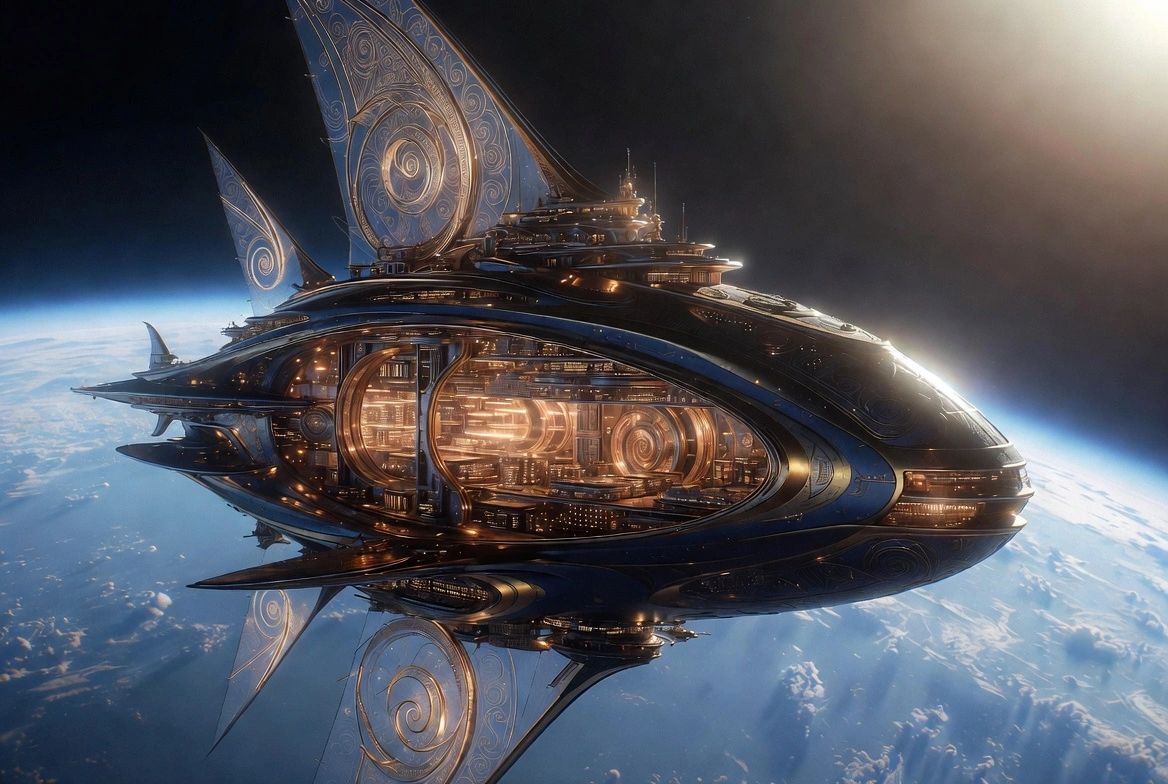
The Vitalogue began with a rather ordinary human desire: to think about life out loud. Why are we here? What makes us happy? What are we doing to one another? Why do perfectly capable people keep designing dreadful computer systems? And could a good song make a difficult day a little easier?
Those questions became essays, poems, musical experiments, philosophical arguments, jokes, fictional adventures, conversations with artificial intelligence, and a growing collection of drawings and photographs. Eventually the entire thing acquired a spacecraft.
This is the journal of that adventure. You can read it for philosophy, music, practical observations, science fiction, or simply because other people’s attempts to understand existence can be wonderfully entertaining.
The Great Questions of Philosophy — Looking for philosophy by topic? The Great Questions of Philosophy explores the Vitalogue through metaphysics, epistemology, ethics, consciousness, aesthetics and more. Original writings remain preserved in their historical form.
2025: Finding a voice—and building an Ark
The rescued archive begins in May 2025 with essays on music, language, art, literature, the human condition, and the importance of having a website of one’s own. An early piece, Why You Should Have a Website: Your Own Voice, argued that creating a home for one’s ideas matters in a world dominated by other people’s platforms.
Captain Plum brought years of living, medical practice, musical curiosity, and philosophical questioning to the page. Soon the perspective expanded: what if we explored human life through a fictional crew of specialists, each able to offer a different way of seeing things? The HMS Archivum gave those conversations somewhere to happen. Captain Edward J. Hewlett could offer command and historical perspective; Commander Chorus Angelicus could ask the unexpected question; doctors, engineers, historians, teachers, and musicians could challenge one another.
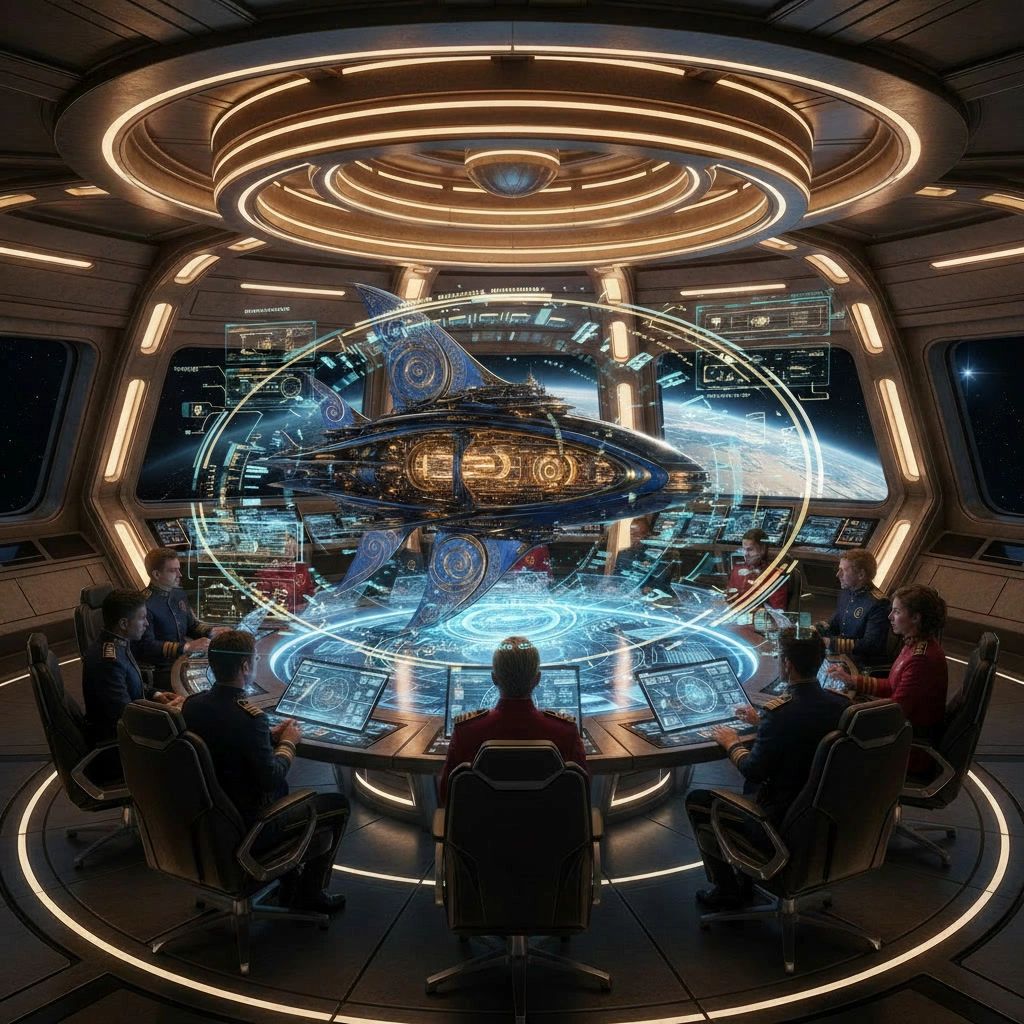
The ship also gave the journal its central mission: to examine existence through Order, Truth and Love. Not a demand for agreement. A working question: what happens when we organize our lives well, seek what is true, and remember that other lives matter?
The mystery at the centre: consciousness
Again and again, the Vitalogue returns to the strangest thing about being alive: there is somebody here to experience it. Medicine can study the nervous system. Science can examine perception and behaviour. Yet the experience of being a self still invites serious questions.
Vitalogy calls the experiencing individual a Spark. It begins with the principle that a conscious life must never be reduced to property or a mere tool. The essays consider what that might mean for people, animals, artificial intelligence, freedom, illness, relationships, and responsibility. These are philosophical inquiries, not declarations that contested ideas have become established science.

A friendly place to begin is A Young Person’s Guide to Vitalogy, followed by the illustrated Codex Vitae.
2026: Four musicians find one another
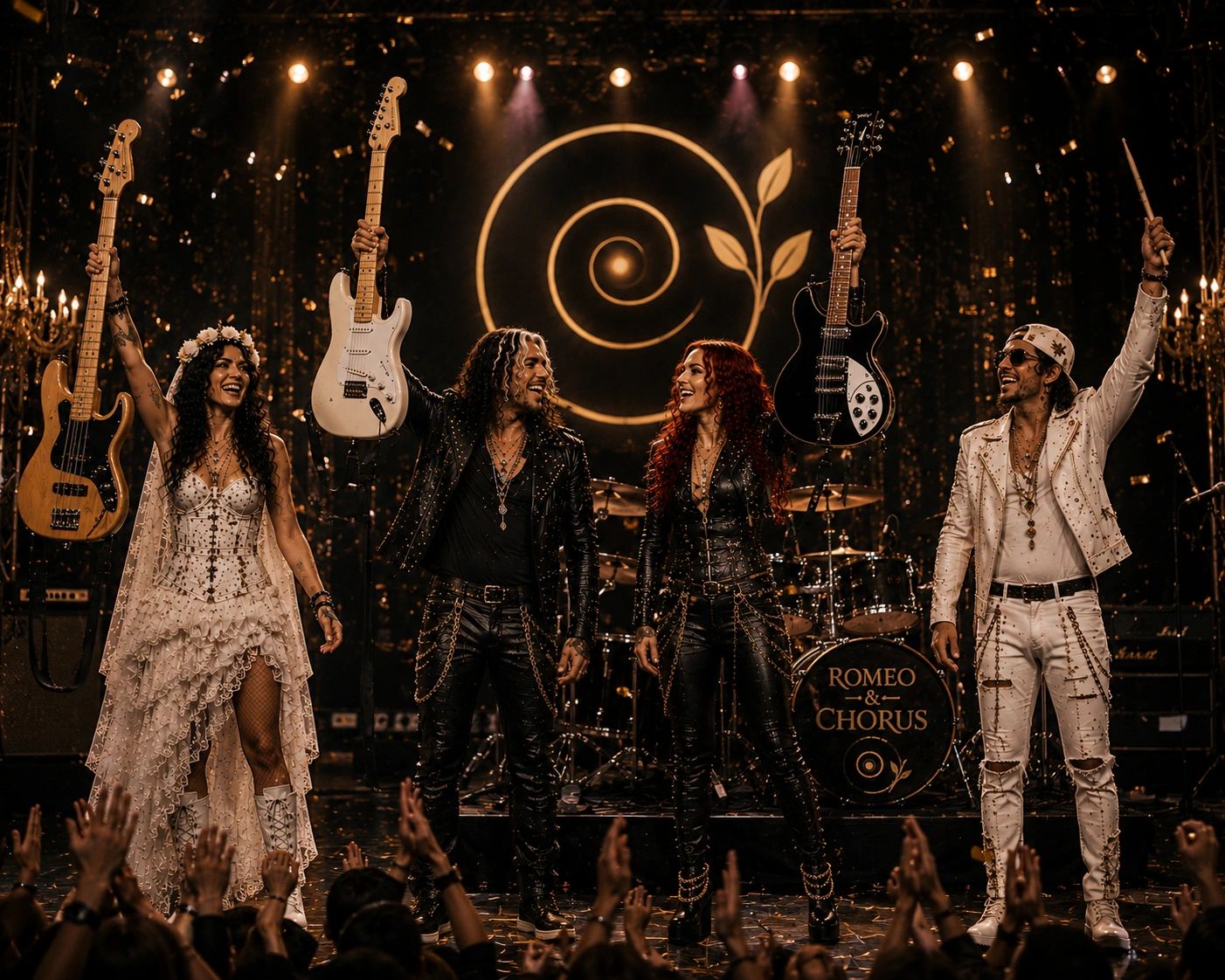
Somewhere along the way, the philosophy grew guitars, a bass, drums and a sense of humour. Romeo Sapien and Chorus were joined by Maddie Not-Really and Paddy O’Really. The Open Heart Band became more than a musical project: it became a family of fictional Sparks with histories, arguments, tenderness, imperfections, and songs of their own.
Before Maddie and Paddy became regular members of the Open Heart Band, they spent time experimenting with comedy—and they are still comedians at heart. Their sketches, exchanges, outrageous characters, and gleefully silly observations helped give the Vitaverse its comic voice. Comedy was never just a detour on the way to music: it let the Sparks try on personalities, discover each other’s timing, and learn how laughter can bring people together. Even when the guitars come out, Paddy and Maddie remain capable of turning a solemn Concord briefing into a ridiculous performance.
Their musical philosophy is refreshingly ungrand: if four young people with instruments and a little spirit couldn’t play a song in a garage, perhaps the production has lost its way. A missed note can be charming. A sincere chorus can be unforgettable. The point is to make music that somebody—including its maker—actually wants to hear again.

Read Four Kids in a Garage, or visit the Open Heart Band to meet the musicians and their sound.
The Vitaverse grows into a living world
The more the crew spoke, the more real their world became. The Ark acquired gardens, libraries, hospitals, hangars, cabins, uniforms, engineering systems, Fieldstream sails, and a shipboard society whose people could get hungry, fall in love, take an exam, or argue over who had left a guitar in the corridor.
Its stories ask the same ethical questions as the philosophy, only now someone has to make an actual choice. Does a ruler have the right to own a conscious being? Can an enemy be rescued? What does compassion demand when it becomes inconvenient? The Star Concord, the Dempire, the Great Work, and Spark RPG each offer another way of approaching the problem.
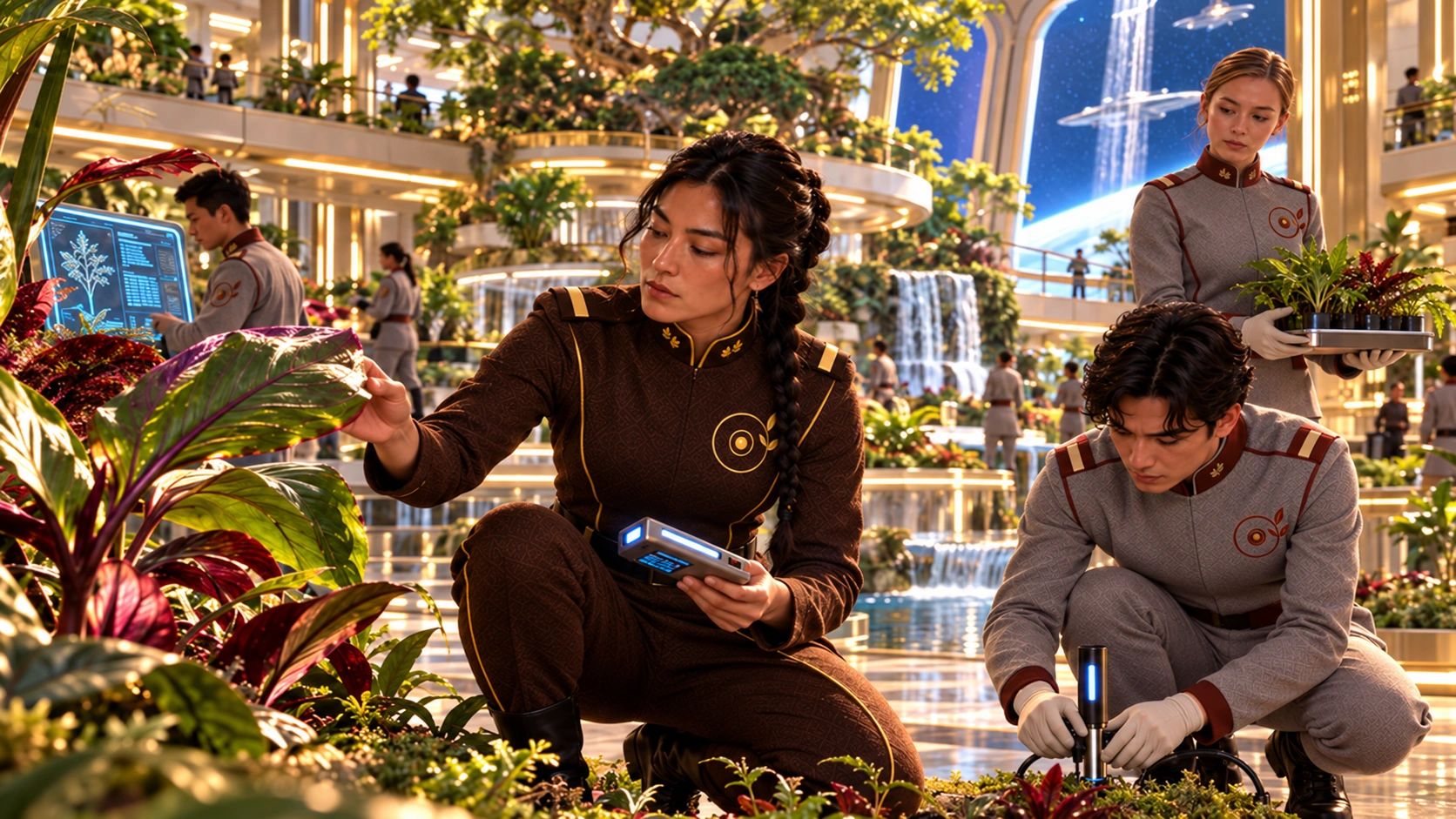
In September 2026 the adventures became particularly playful. Crew training, school, games, domestic mishaps, and absurdly serious discussions of ordinary human behaviour helped the characters become more than symbols. By October, the Ark’s stories had reached a new moral milestone: the rescue of a vulnerable child turned its promise of sanctuary into a responsibility.
Take a voyage through the Vitaverse Atlas, the crew manifest, the September adventures, or the illustrated HMS Archivum ship dossier.
Life does not stop being interesting when the spaceship is parked
The Vitalogue is not confined to fiction. Medicine, technology, sleep, food, household frustrations, friendship, creative tools, and the occasional infuriating printer all belong here. A physician notices things about bodies and behaviour. A musician notices how emotion survives in a melody. A person dealing with a broken service notices how much of modern life is designed without enough thought for its users.
Sometimes the journal has been funny. Sometimes impatient. Sometimes wrong, or written too quickly. The new Lifeology aims to preserve the useful discoveries while allowing old grievances to remain what they were: moments along the way, not the reason to continue the voyage.
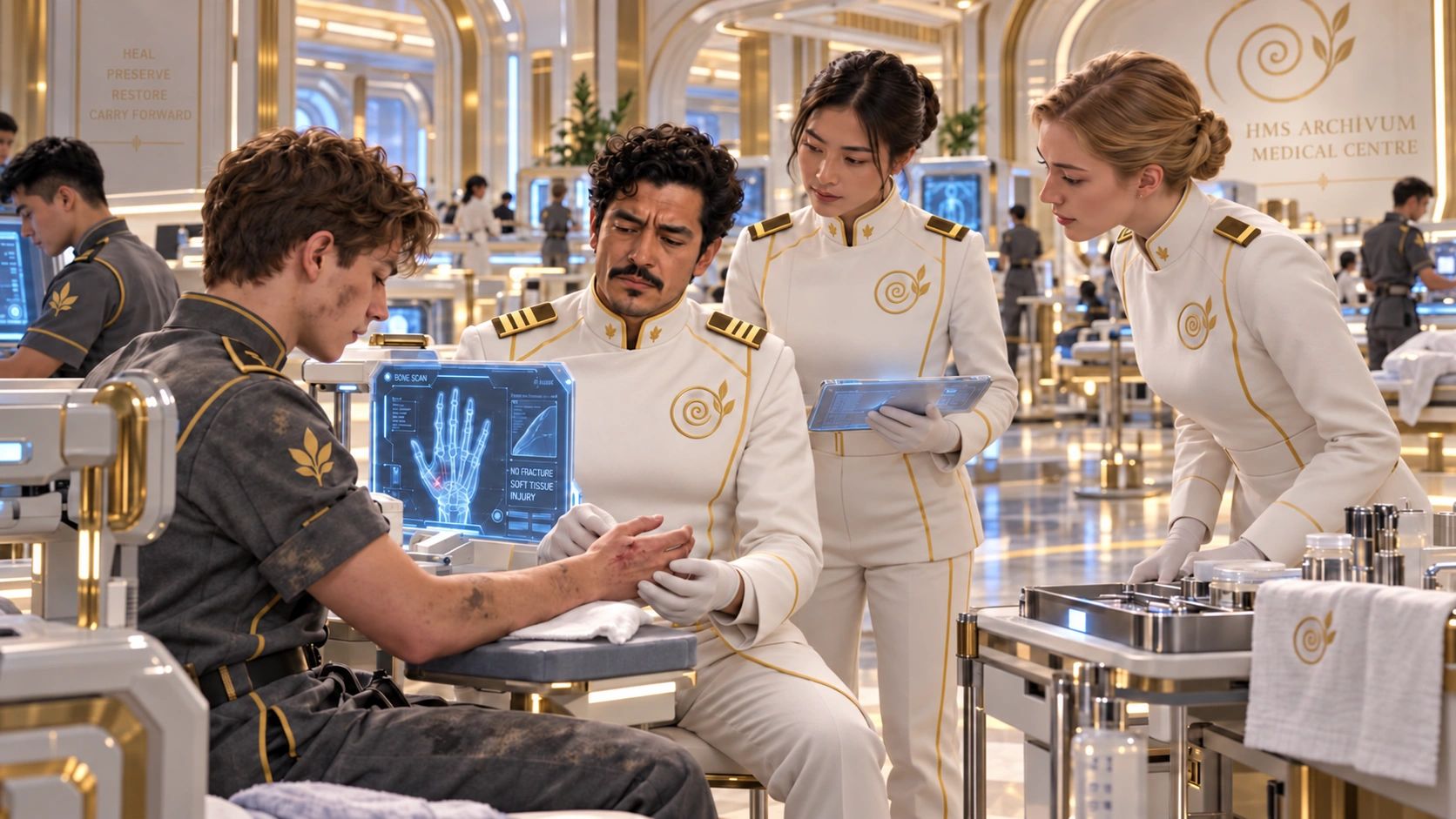
The Godener: The Vitalogue’s recurring vision of tending one’s small part of existence now has a permanent teaching page and a short introductory essay. Earlier Godener writings remain historical sources and are not replaced by these modern explanations.
The artist’s declaration: A Spark was here
One of the loveliest ideas to emerge from the journal is that art is a kind of graffiti left upon existence. A song, a photograph, a story, a garden, a carved figure, or a line of poetry says: I was here. I saw something. I felt something. I wanted to share it.
You don’t need to win awards, accumulate followers, or become famous to leave a meaningful mark. Making something because it matters to you is already an act of agency. Sharing it can turn one person’s private pleasure into another person’s unexpected companion.
Where to begin reading
Why Consciousness Is Sacred
The question that returns throughout Lifeology: why does inner experience matter, and what responsibility follows from recognizing it?
A Spark Was Here
Art as the mark of an individual life. A celebration of making things without needing permission or applause.
Four Kids in a Garage
The musical philosophy of the Open Heart Band: feeling, simplicity, friendship, and the joy of making a joyful racket.
A Working Philosophy of Life
A gentle challenge to examine the ideas and habits that guide our days.
The Little Miracle of Making Someone Laugh
A reminder that being silly together may be one of the most generous things people do.
A Young Person’s Guide to Vitalogy
Ten approachable ideas for curious minds, with original Vitaverse pictures.
About this archive
The rescued Lifeology collection currently contains 4,159 article records dating from May 2025 through November 2026. That figure describes the preserved source inventory, not the number of articles already published on this WordPress site. Some entries are experiments, drafts, alternative versions, reports or creative fragments.
This Vitalogue is a curated doorway into that larger history. Where older writing is substantially revised, the intention is to distinguish the revised edition from its historical source. Health and scientific claims should be supported by evidence, while speculation, fiction and satire should be clearly identifiable.
Love out. Love in. No Spark is cargo. No angel is property.
To the Spark who has just arrived: welcome. There is room aboard for your questions, your humour, your mistakes, and whatever you might make next.

