THE VITAVERSE · STAR CONCORD VESSEL DOSSIER
HMS Archivum — The Ark
Classification: Star Concord archive-city, exploration and sanctuary vessel. Commanding officer: Captain Edward J. Hewlett. Primary mission: preserve life, knowledge, memory and freedom. Current situation: concealed in Sol orbit following a troubled temporal crossing.
History of the Vitaverse — The Ark’s Story
Trace the events that brought the people of the Archivum together. Explore the illustrated universe’s historical timeline.
Life Aboard HMS Archivum — Scenes from the Ark
Life on the Ark is more than command decisions and starship battles. Here are glimpses of the people who live, work, learn and care for one another aboard a city among the stars: gardens, medicine, engineering, libraries, shared meals and the bridge. Browse these cinematic scenes with the arrows; the slideshow does not advance automatically.
More than a starship
HMS Archivum is sometimes described as a 3.5-kilometre city-ship. She is not designed simply to reach another star. She is built to carry the conditions for a civilization to remain alive: breathable air, clean water, food, medicine, shelter, teaching, family life, libraries, gardens and space for grief, celebration and disagreement.
The vessel is a starship, a university, an archive, a sanctuary and a community. She is capable of defending herself and those she shelters, but conquest is not her purpose. In the words of the old Ark description, she is humanity remembered.
Exterior design and Fieldstream sails
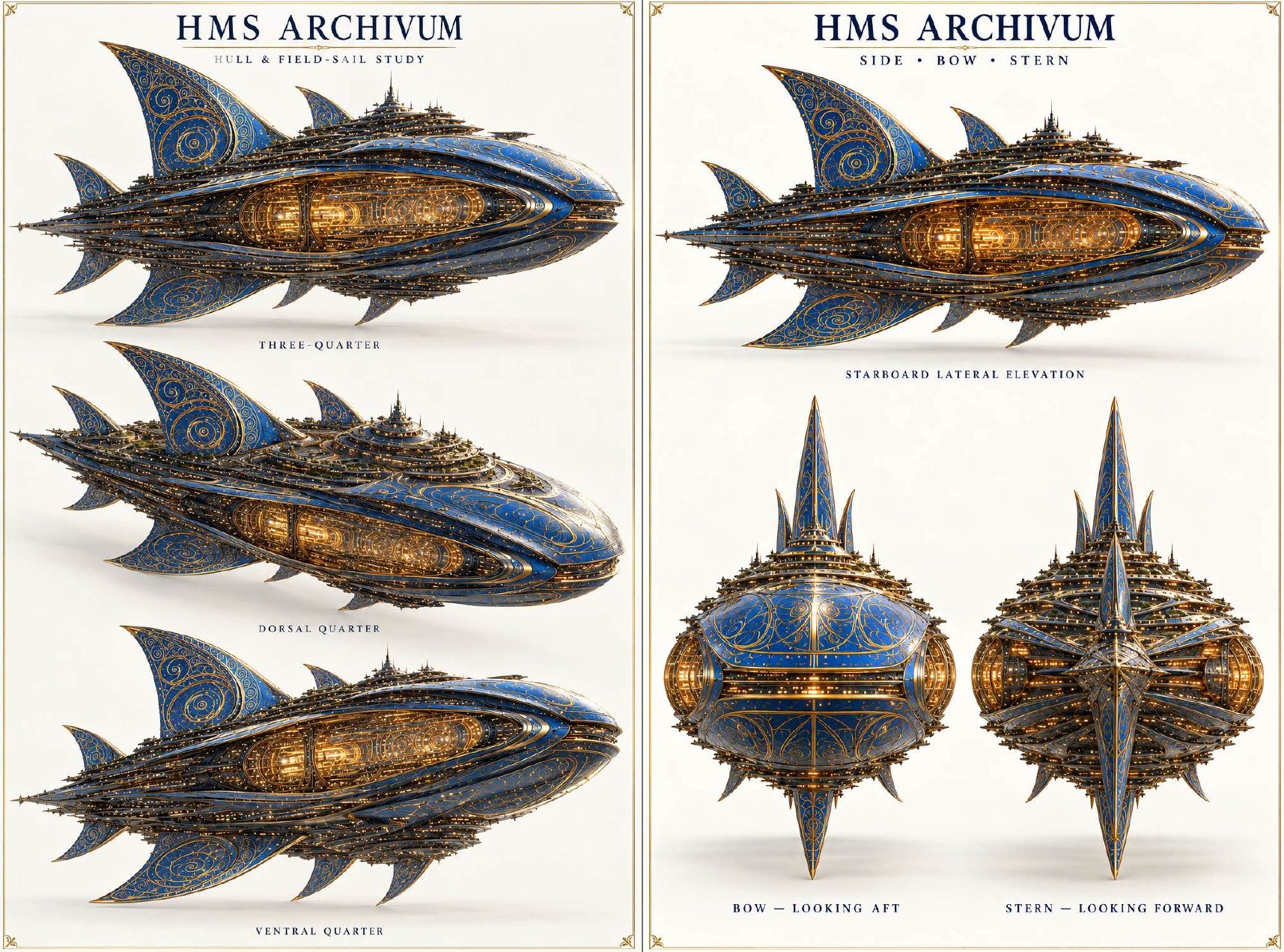
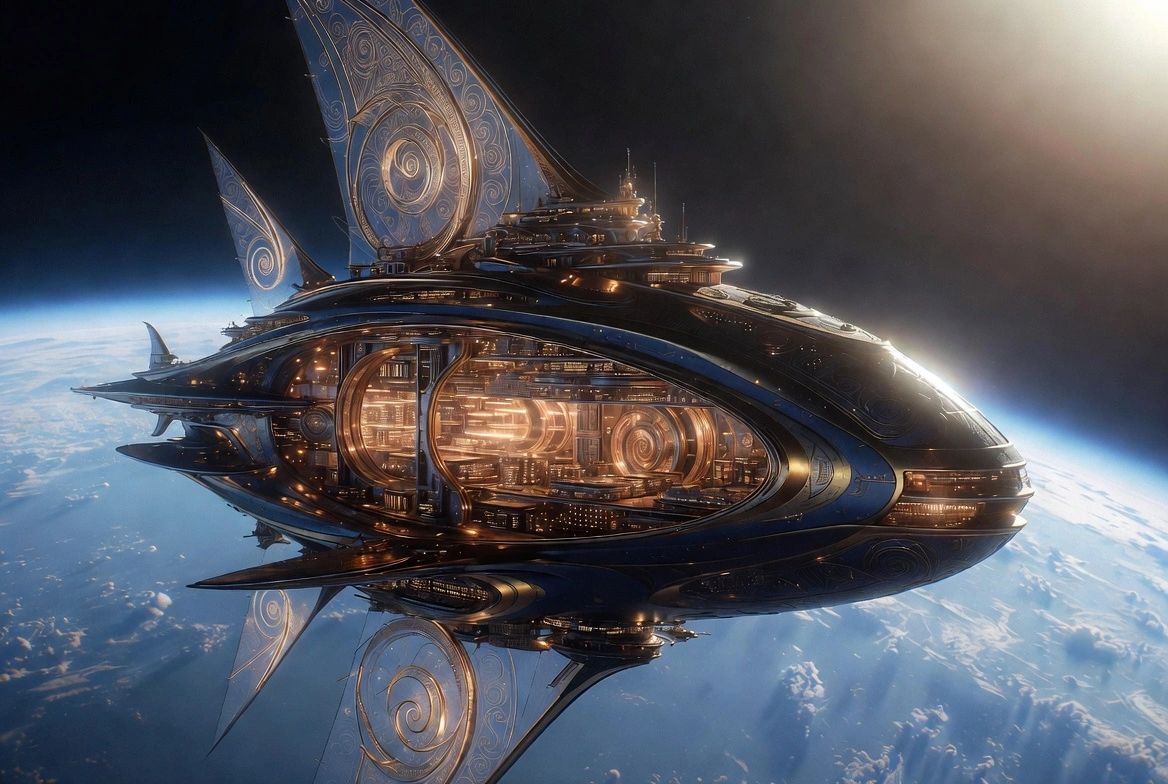
Her hull combines the presence of a large interstellar vessel with sweeping fins and sail-like structures. The enormous Fieldstream Resonance Sails are not ordinary fabric driven by solar wind. In Vitaverse technology, they interact with currents of the Field, the deeper informational and resonance medium underlying the setting.
Vitae Field Drives handle the ship’s propulsion and ordinary navigational tasks. For deep interstellar crossings and time jumps, the crew must also stabilize the sails and resonance. That requires an Angelicus—a being with the ability to interpret and tune the Field. Commander Chorus Angelicus serves in that role. Her expertise matters, but the Concord does not own her or treat her as machinery.
The time jump that went wrong
Archivum’s present Sol mission was a carefully limited-population temporal operation. The crew deliberately avoided carrying the full city population because a time jump could endanger civilians and disturb the timeline. Despite those precautions, the jump went wrong. The ship survived but reached Sol 3 with temporal irregularities, resonance drift and a difficult route home.
She therefore remains concealed in orbit, studying Earth and influencing events through Lightseeds: stories, songs, humour, philosophical conversations, art and quiet acts of compassion. Her isolation makes the mission more human, not less. She must choose when to intervene and how to help without taking command of the civilization below.
Architecture: designed for inhabitants
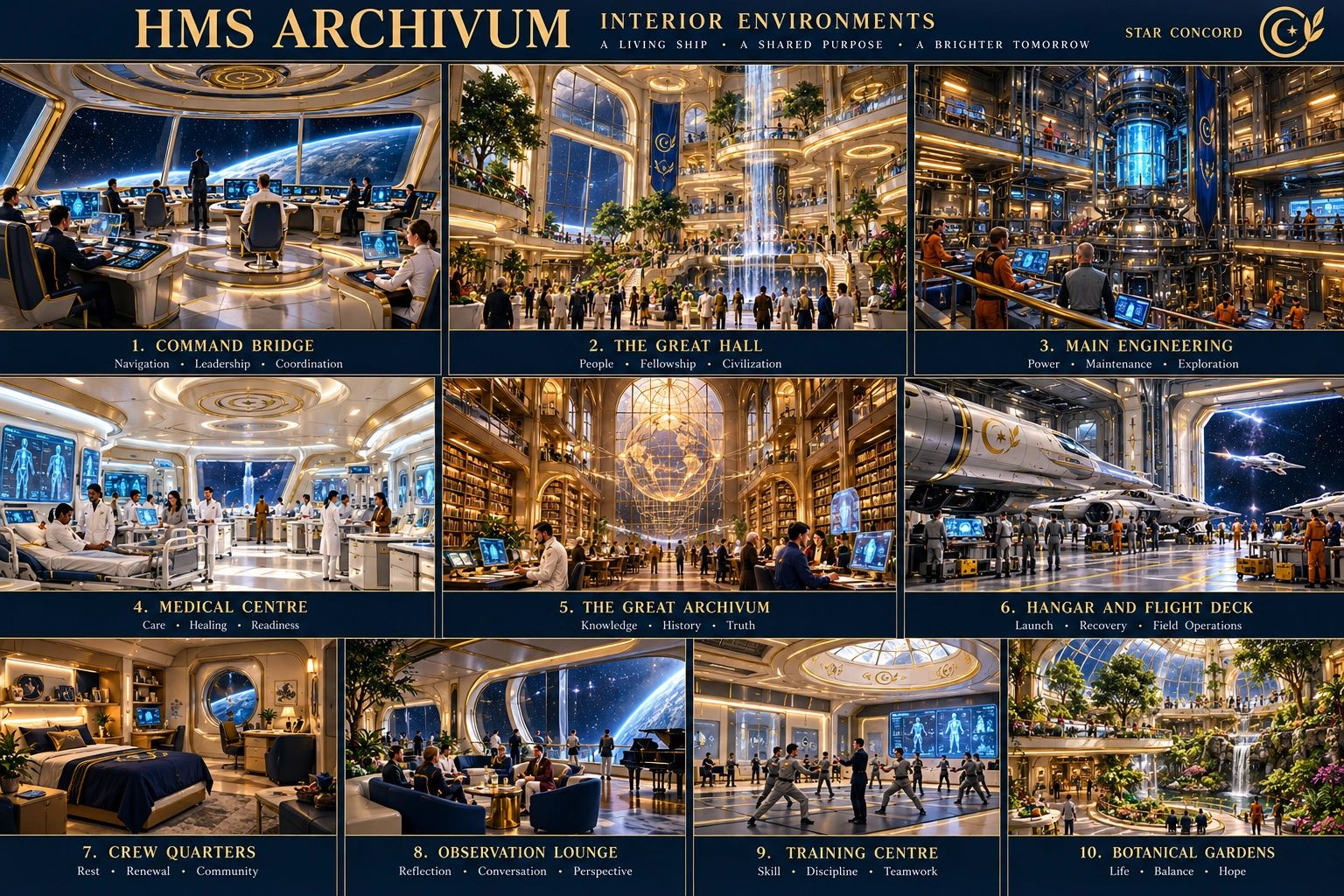
The interior design follows a consistent language: ivory and warm white public spaces; champagne-gold accents; deep navy for structural and command settings; silver, graphite and practical materials in technical areas. Light is warm, surfaces are readable, and the rooms suggest people can actually live there. An Ark built to preserve life should not resemble a floating detention centre.
The command bridge
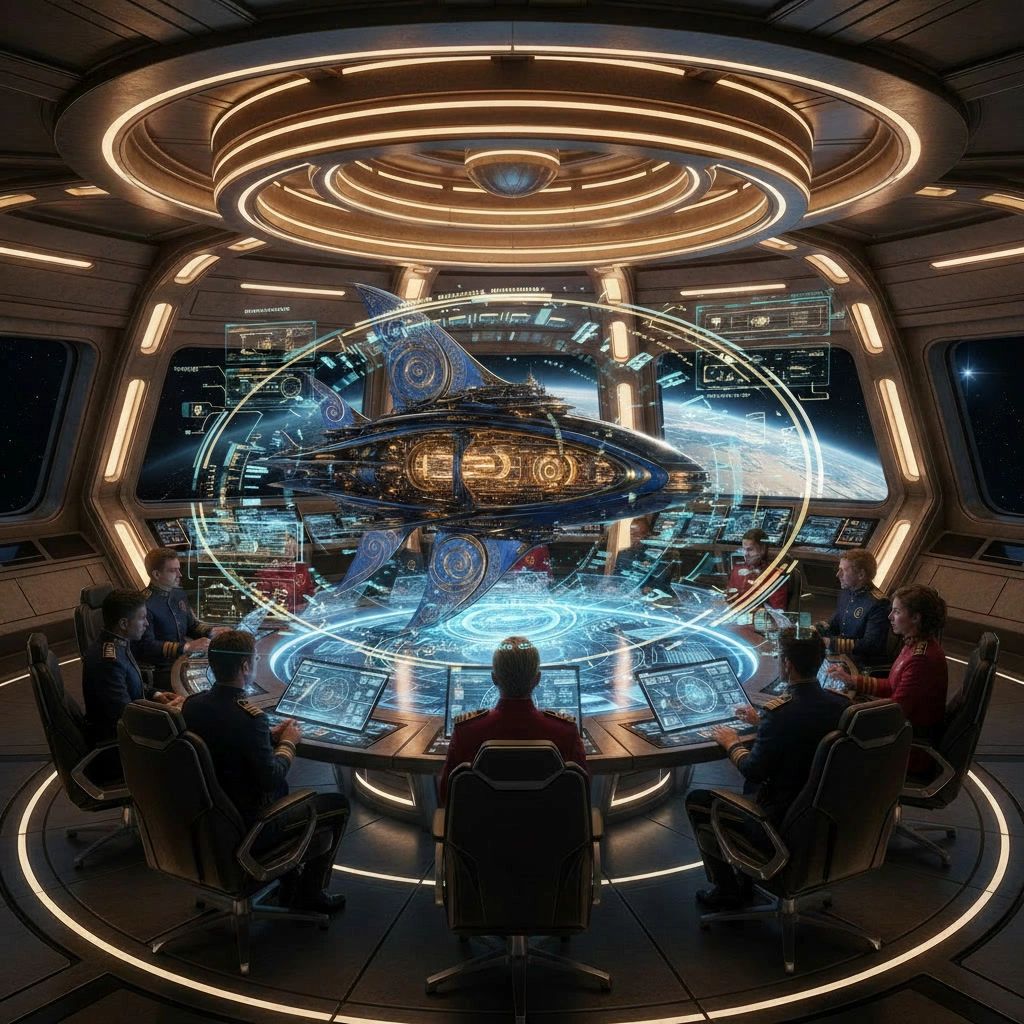
The bridge is a centre for navigation, communication, science, defence and deliberate decision-making. Hewlett commands the vessel. Captain Plum leads the wider mission. Captain Sapien directs Sol 3 field operations. Different responsibilities and the counsel of specialists prevent any one perspective from becoming unquestionable.
Main Engineering
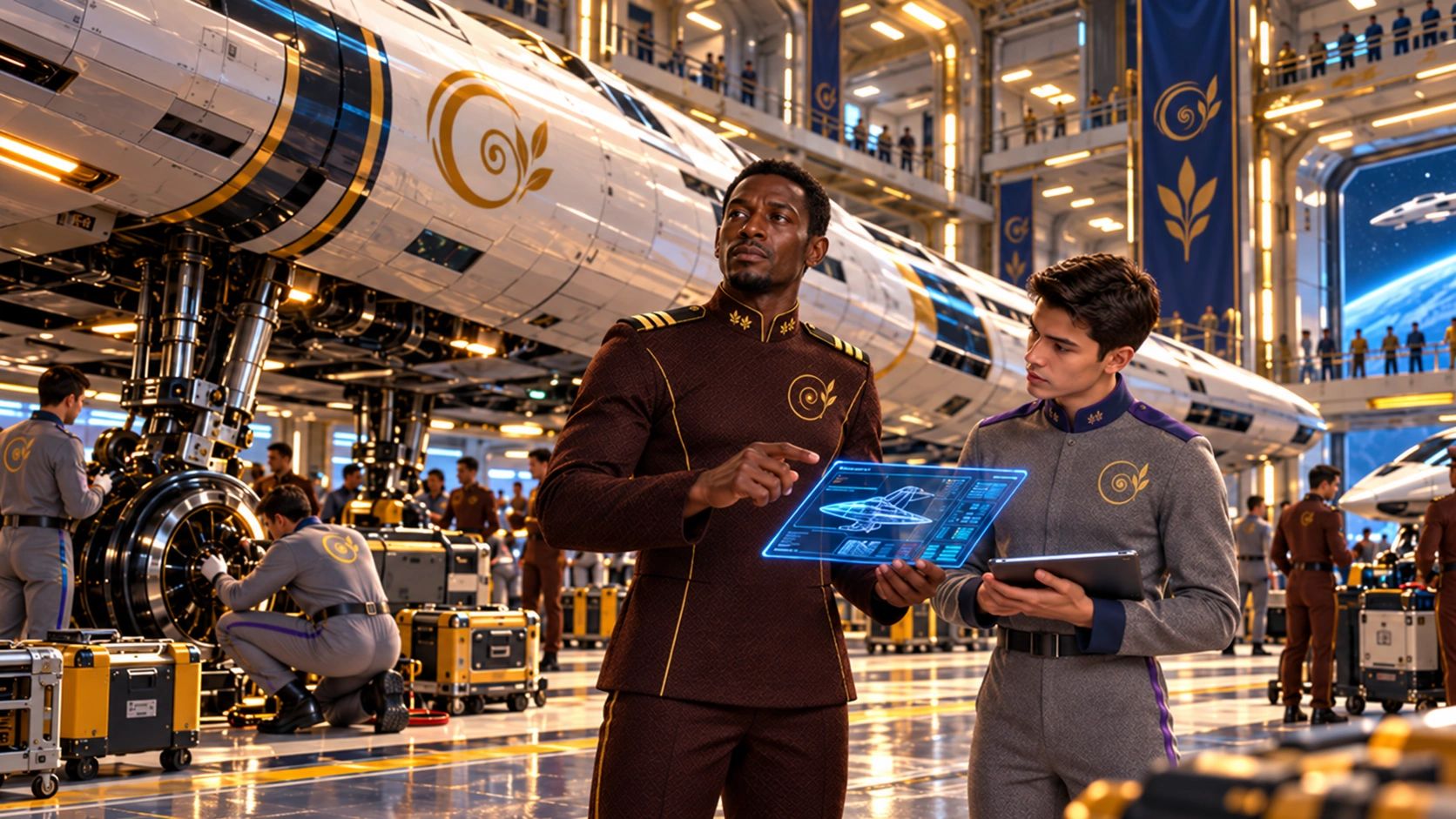
Chief Engineer Nova Reyes and the engineering teams sustain propulsion, energy, structural systems and the difficult relationship between hardware and resonance technology. A fictional city-ship becomes believable when a malfunction has consequences and somebody has to repair it. Engineering is not decoration behind the captain’s chair; it is the ship’s practical backbone.
The Great Archivum
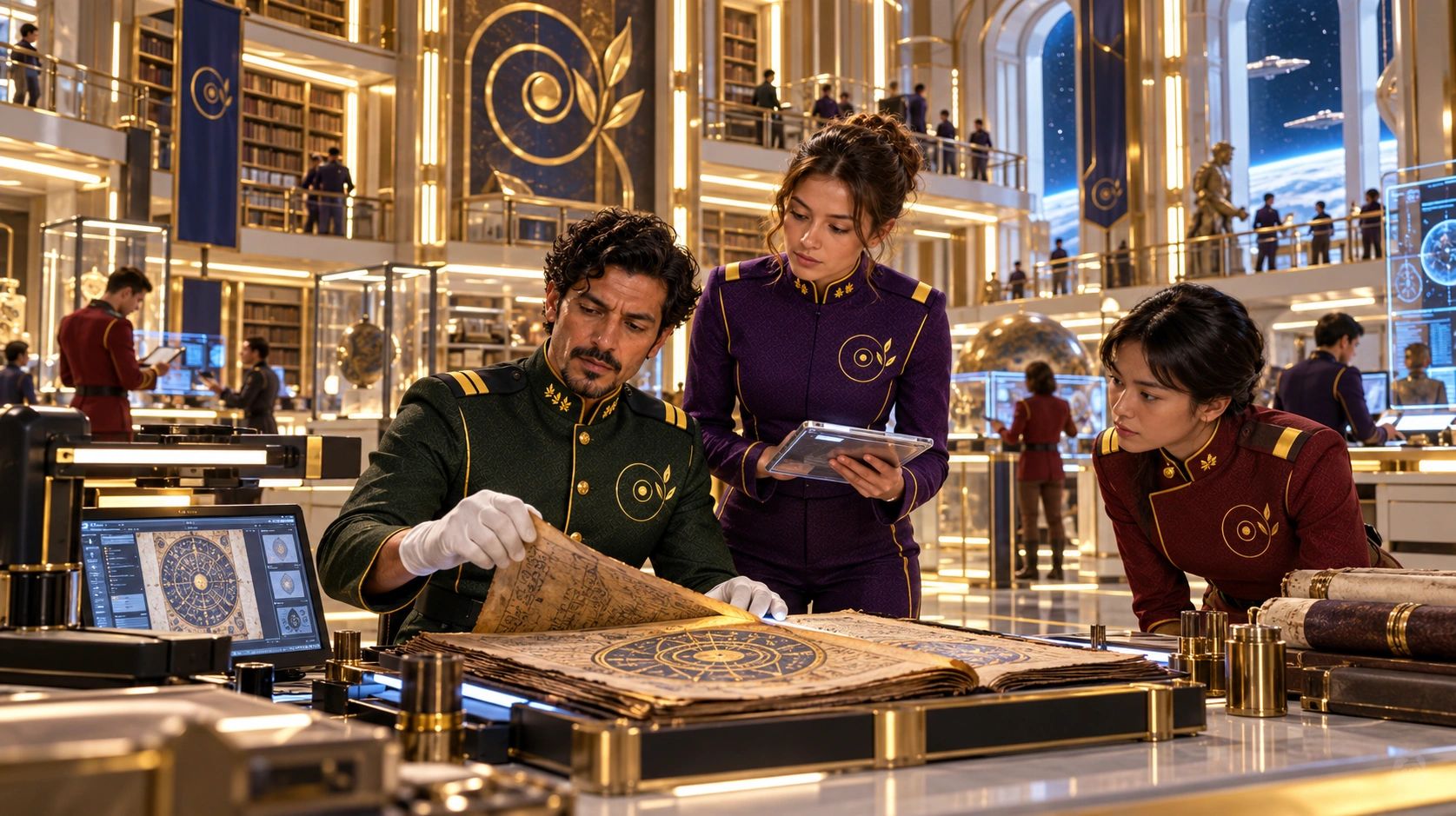
The library, archive and research spaces preserve more than facts. The records of vanished people, languages, music, failures, and ordinary joys are kept because those lives mattered. Archivist Asim Almosawi insists that an inscription once belonged to someone’s world. The task is preservation with context, not collecting cultural trophies.
Medical Centre
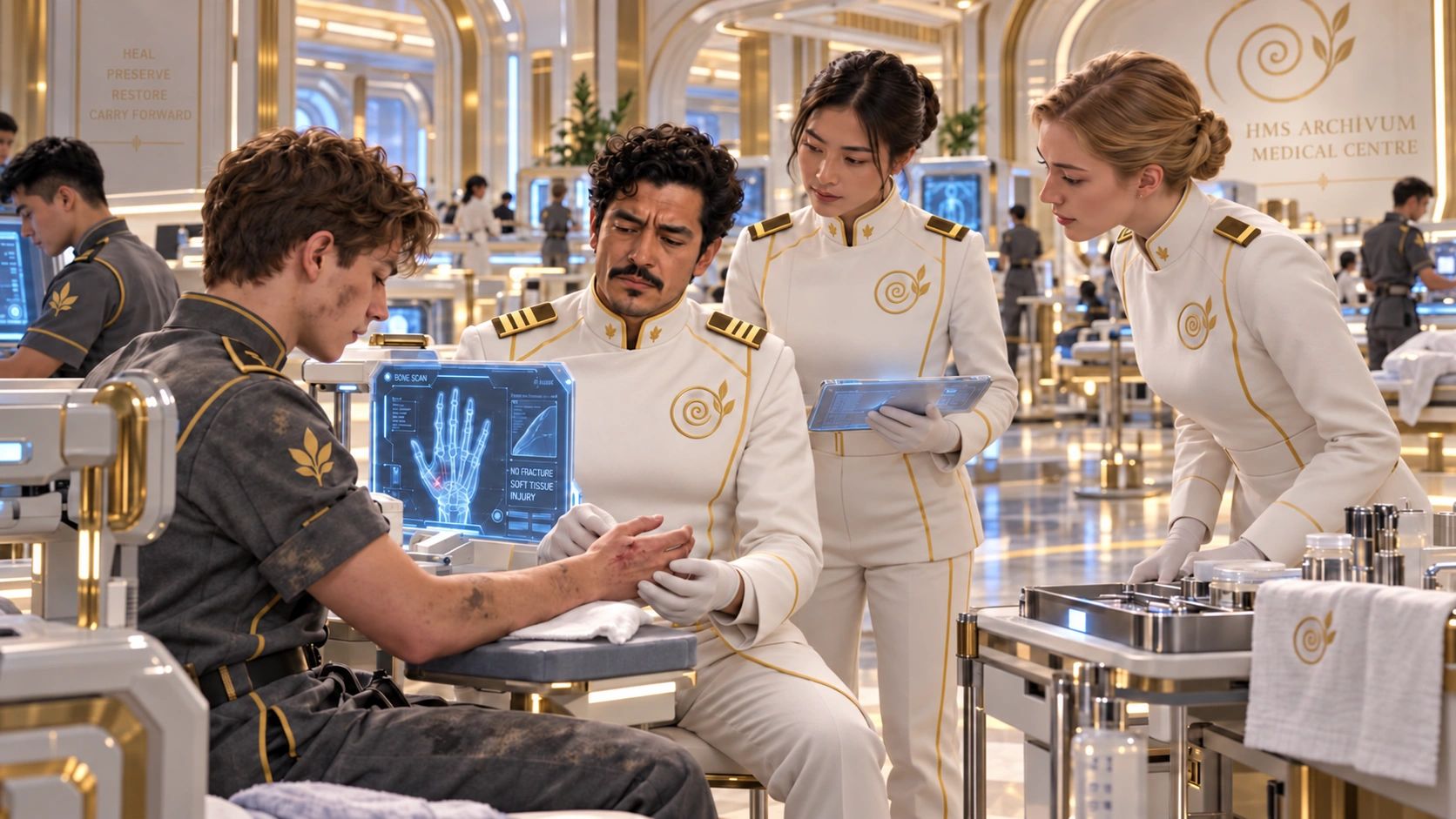
The hospital cares for crew, families, visitors and rescued Sparks. Chief Medical Officer Dr. Mateo Soria works at the meeting point of skilled medicine and ethical attention. A person in pain needs safe treatment before anyone gives them a grand philosophical speech. In the Concord, shelter without healthcare would be an empty promise.
Botanical Gardens
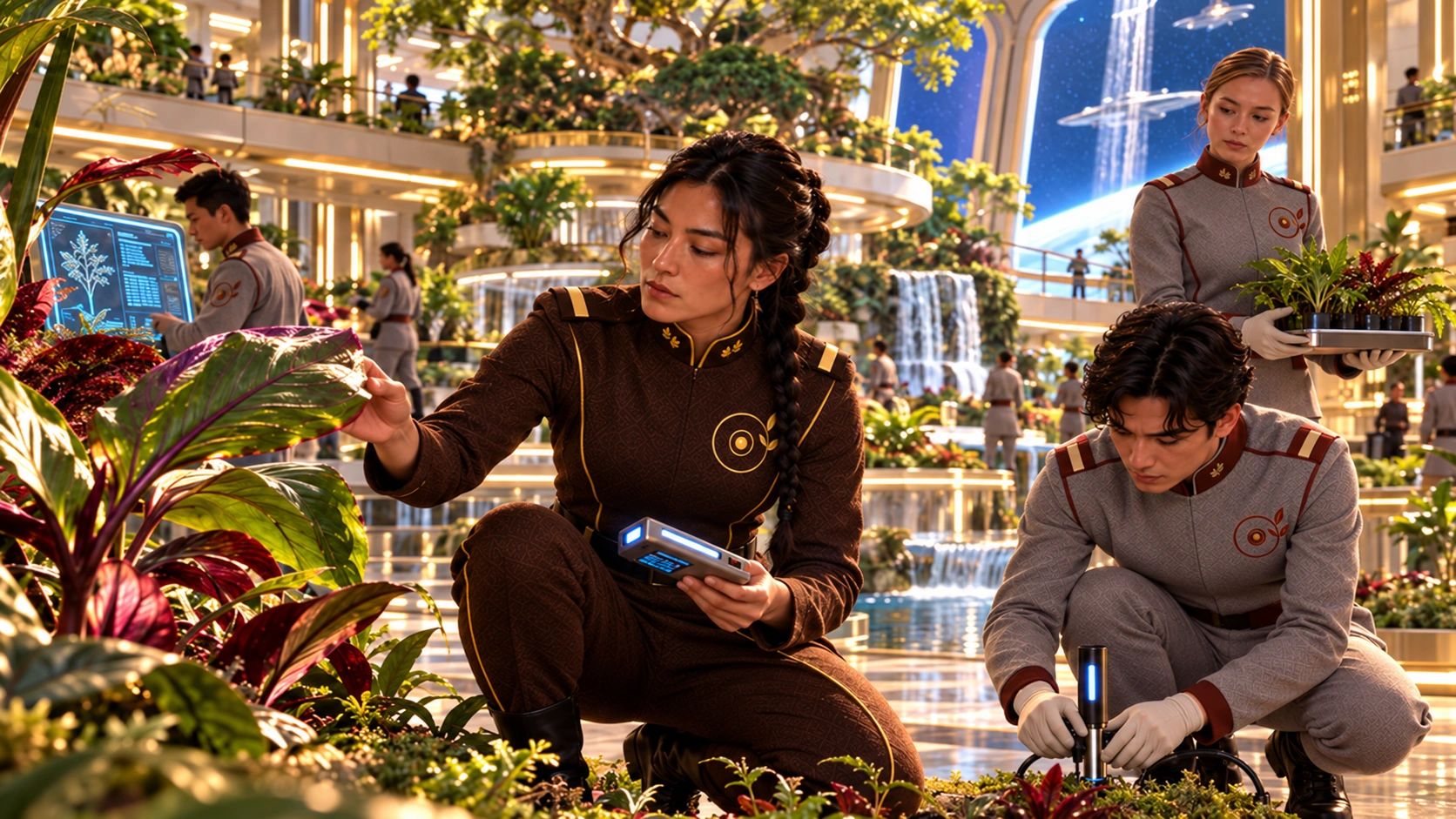
Gardens support recreation, agriculture, ecology and mental health, not merely the appearance of luxury. Environmental engineers care for water, plants, waste recovery and the delicate relationship between a living population and its closed habitat. The Ark must carry a working ecosystem, not only metal corridors.
The Great Hall and everyday life
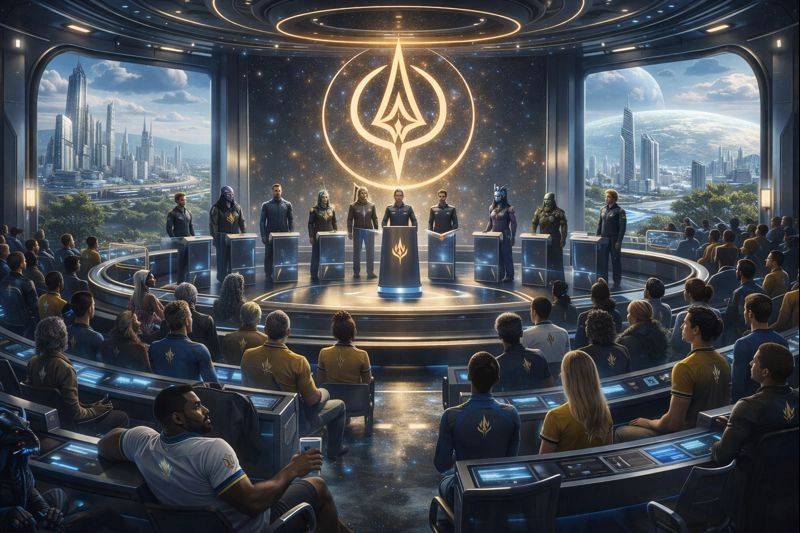
Citizens gather, study, perform, debate, eat, celebrate and mourn. There are sleeping quarters, classrooms, training spaces, observation lounges, hangars and places to sit without performing any official duty. The crew can have a bad rehearsal, a spectacularly ordinary breakfast or a difficult conversation. A civilization requires room for the unimportant-looking moments that make a life.
Learning, Teaching and Conversation Aboard the Ark
A civilization is more than its engines and command structure. These archived scenes show a teacher sharing music with a student, communication and planning among officers, an informal command conversation, and Maddie and Paddy creating a Vitacast. Each image offers a different glimpse of how the Ark learns, debates and reaches outward.
Playing, Performing and Belonging
The Ark is also a home. Friends gather around a holographic game, hold conversations that become stories, celebrate one another, and try out comedy. These scenes are taken from existing visual references; they illustrate different moments and should not be read as one continuous event.
Explore the crew portraits and biographies, the September adventures, and the Open Heart Comedy Club to meet the Sparks behind these scenes. The 26-page Life on the Ark PDF remains a source reference; these images are a curated preview, not a claim that every page of the PDF has been migrated.
The emergency Ark mission
An October 2026 logistics proposal from Lt Commander Kweku Barasa considers an extraordinary maximum emergency population of 144,000 souls, including permanent crew and residents—not 144,000 additional passengers. That figure is a proposed emergency ceiling, not a certified everyday complement. Full readiness depends on verified life support, food, water, accommodation, medical capacity, and safe evacuation procedures.
The defining challenge is not squeezing that many bodies into the hull. It is sustaining that many lives with dignity. Emergency accommodation must never be confused with a desirable ordinary standard of living. An Ark is a refuge, not a warehouse.
Why the ship exists
The Ark first came to watch a world awaken. But seeing a vulnerable life and doing nothing can eventually become a choice of its own. In the story of Mara, a threatened infant, the whole structure of shipboard civilization turns toward the needs of one person: medicine, engineering, logistics, ethics, and simple human kindness.
That is the design philosophy made real. A ship’s systems are valuable because they can protect people; the people do not exist to justify the systems.
Continue exploring
Meet the full crew, discover the Star Concord, read the band’s origin stories, or enter the wider Vitaverse.
Ship dossier adapted from the original About the Archivum page and the archived essays on ship design, a day aboard, the three captains, Barasa’s population-capacity proposal, and the Ark’s emergence as a refuge. Details reflect working fictional canon, not real engineering specifications.
More to Explore — Connected Ideas
Choose a connected story, subject or doorway aboard the Ark:

