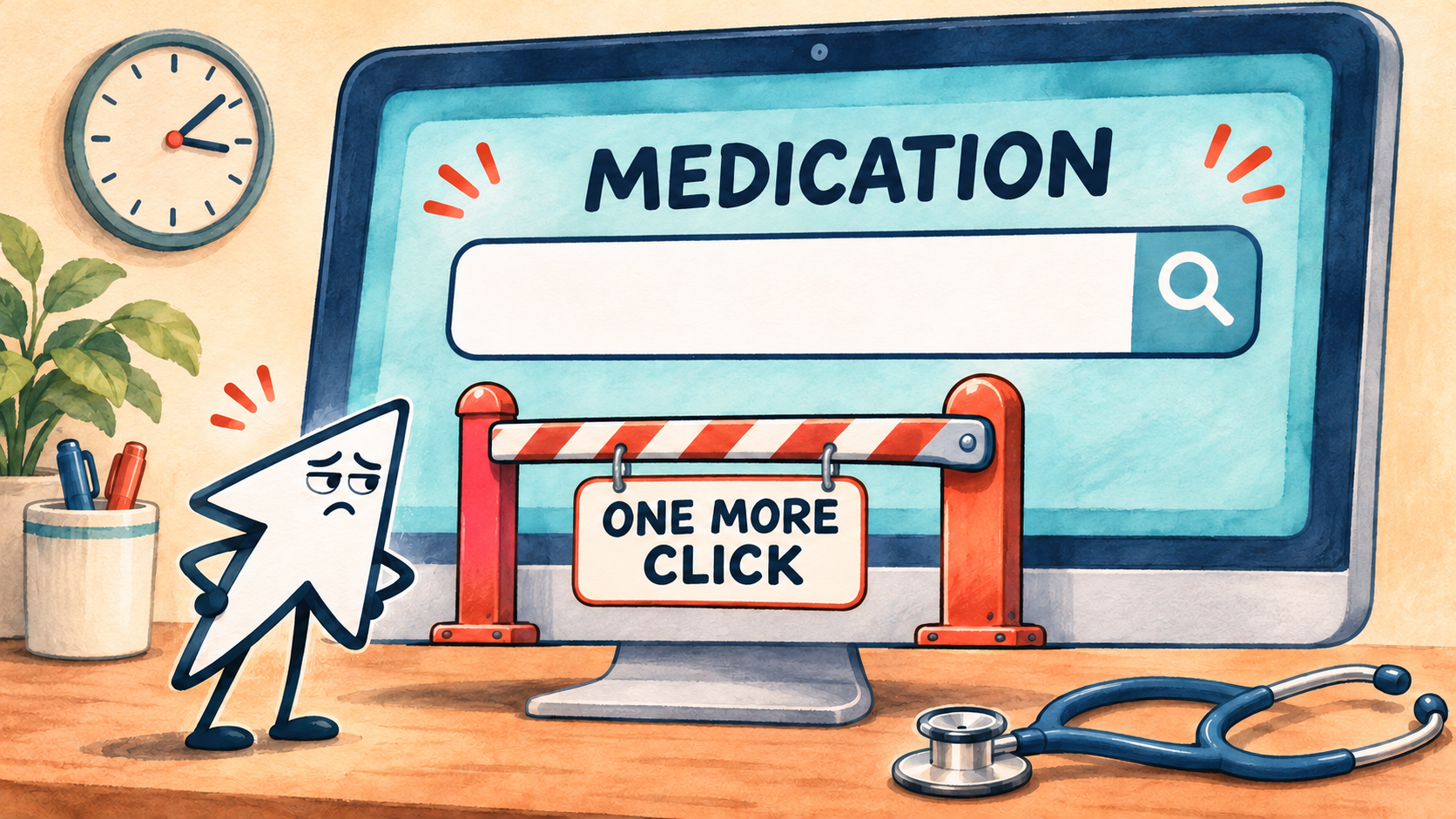

Imagine opening the search box in a document because you want to find a word.
The box appears. You start typing. Nothing appears in it.
First, you must move the mouse into the search box and click again.
You already asked the computer to open the search box. What did it imagine you were planning to do with it? Admire the rectangle? Contemplate its emptiness? Invite it to dinner?
This is today’s small but thoroughly irritating example from Plum’s experience with electronic medical records.
An EMR is the software a doctor uses to keep notes, review information, and write prescriptions. In the TELUS system Plum uses, opening the medication window does not automatically put the typing cursor in the medication-name field.
He opens the box to enter a medicine.
Then he must click inside the box to establish that, yes, entering a medicine was indeed the intention.
Apparently, opening the prescription window was merely an expression of general interest.
There is a straightforward name for what is missing: keyboard focus. It means telling the computer which field should receive the words you type. In this prescribing step, the medication-name field should be ready as soon as the window opens.
Open the window. Type the medicine.
That is the natural sequence.
Instead, the software inserts a little ceremony between intention and action. Find the field. Aim the pointer. Click. Now proceed with the task you had already requested.
“It’s only one click,” someone will say.
Yes. And a small stone in your shoe is only a small stone. Repetition is what makes it wearing.
The problem is bigger than the movement of a finger. Each unnecessary step asks for a little attention: look here, locate that, activate this. The doctor has to keep supervising the interface while trying to hold a clinical conversation and make decisions.
There are already important things to consider when prescribing: the right treatment, the dose, allergies, interactions, and whether the patient understands the plan. Those decisions deserve attention. Getting an empty field to accept typing should be an effortless part of the process.
Anyone who uses a computer for work will recognise the feeling. You know what you want to accomplish. The software makes you stop and explain your intention again through another click.
One useful way to assess a work program would be to watch someone use it through a normal day. Count the moments when the person has to guide the computer through an obvious next step. Ask what each action contributes. Where an action contributes nothing, look for a way to remove it.
That would be a worthwhile improvement.
Plum’s complaint is about respect for the person doing the work. Human time and attention matter. A tool used throughout the day should make thoughtful use of both.
So here is a modest request for the prescribing workflow: when the medication window opens, put the cursor where the medication name goes.
The window is open. The task is obvious.
Please stop making the doctor knock twice.
Leave a Reply