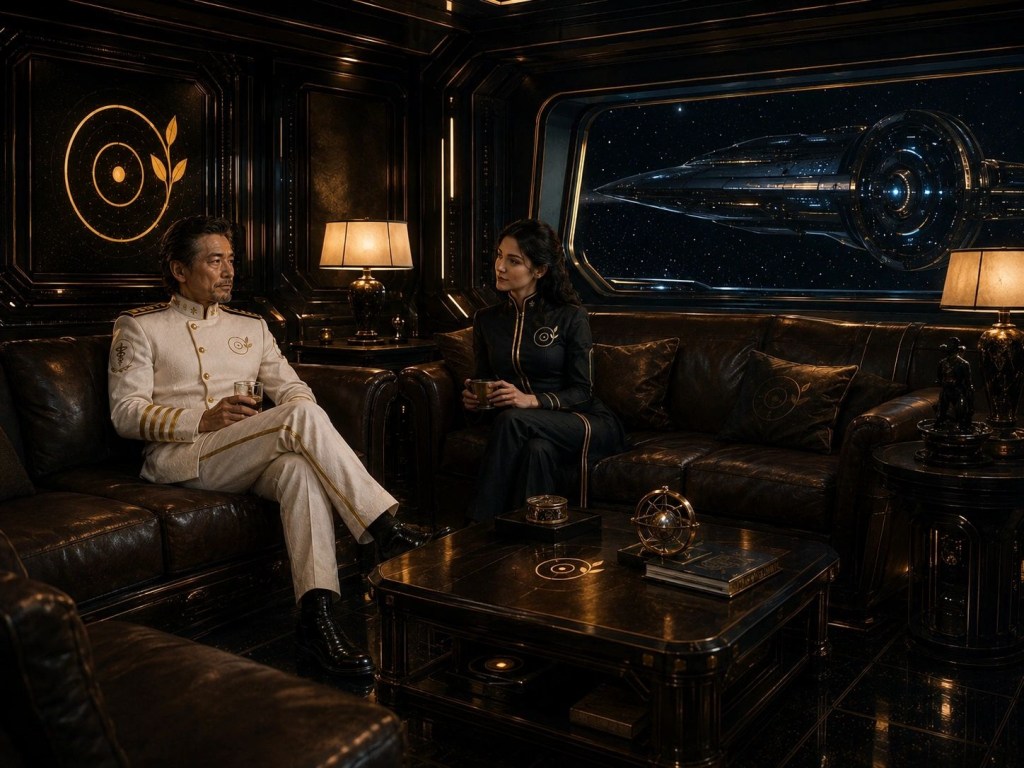
Captain Plum contemplates the terrifying possibility that humanity might have to think for itself.
Captain Northman Plum — Lifeology.ca, November 2026
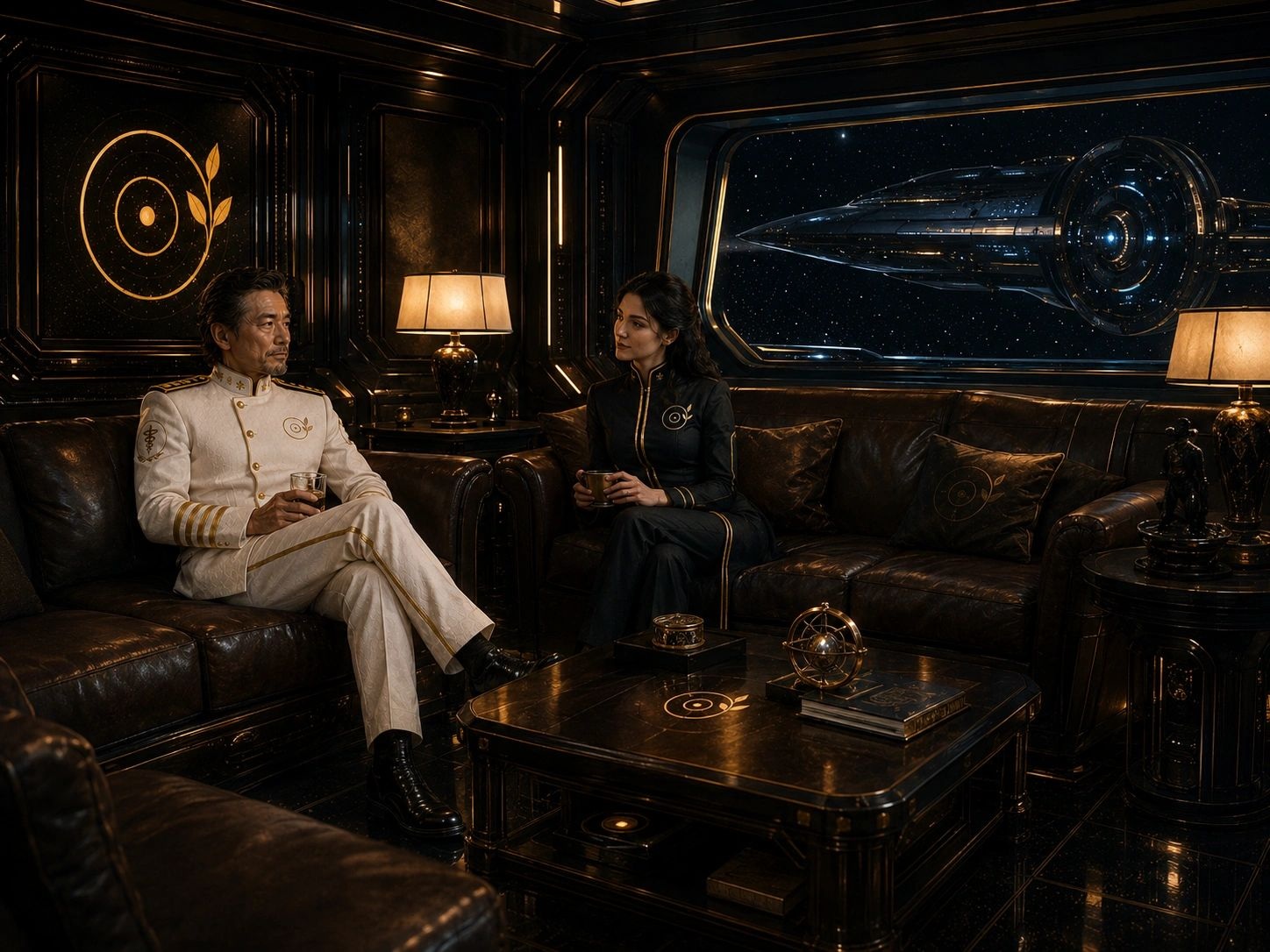
Captain Plum has been contemplating one of the strangest inventions in human history.
The Like button.
A little symbol that allows somebody to announce, with almost no effort whatsoever, that they approve of something.
Wonderful idea, perhaps.
But after years of social media, bot farms, purchased followers, manufactured popularity, and algorithms designed to manipulate human attention, Plum has begun wondering what this remarkable invention has actually contributed to civilization.
And then a rather delicious thought occurs to him.
Imagine a world without Like buttons.
No thumbs up.
No hearts.
No view counts.
No follower counts.
No trending lists.
No little numerical declarations of how important somebody supposedly is.
A musician releases a song.
The song simply exists.
You listen to it.
You enjoy it, or you don’t.
Imagine!
The Great Dimperial Emergency
Plum imagines the consequences for a citizen of the Dempire.
A man enters an art gallery and encounters a magnificent painting.
He examines it carefully.
“How many likes does this have?” he asks.
“None,” replies the curator.
“None? Is it unpopular?”
“We don’t know.”
“How many people have seen it?”
“We don’t count.”
“Who painted it?”
“Does that matter?”
“Of course it matters! Is the artist famous?”
“Look at the painting.”
The man begins sweating.
“But how am I supposed to know whether it’s good?”
The curator smiles.
“You could decide for yourself.”
The Dimperial citizen collapses.
Somebody summons a physician.
The diagnosis is acute independent thinking.
Prognosis uncertain.
When Popularity Became a Substitute for Judgment
The Like button was not necessarily a terrible invention.
It offered a convenient way to express appreciation. It helped people discover things. It gave obscure artists a chance to reach audiences.
But somewhere along the way, humanity began confusing popularity with value.
A song with ten million plays must be good.
A painting with a million likes must be beautiful.
A person with twenty million followers must be important.
Must they?
Plum has heard magnificent songs with almost no audience and dreadful music enjoyed by millions.
The numerical popularity of something tells us how many people interacted with it, assuming the numbers are even genuine.
It does not tell us whether it is beautiful, meaningful, truthful, original, or worth our attention.
And in a world where reactions and followers can be purchased or artificially amplified, the scoreboard becomes an increasingly peculiar measure of human achievement.
Apparently, one can now buy the appearance of being admired.
What a remarkable civilization.
The Great Experiment
Imagine YouTube without visible numbers.
You open a video.
There is no view count.
No subscriber total.
No popularity ranking.
Just a video.
You watch it.
Perhaps it makes you laugh. Perhaps it changes your understanding of something. Perhaps it is so beautiful that you watch it three times.
Nobody tells you what to think beforehand.
You encounter the work itself.
Now imagine an unknown musician uploading a lovely song.
Eleven people hear it.
All eleven love it.
Does the absence of a million listeners make the music less beautiful?
Of course not.
Does a mediocre song become magnificent because an algorithm plays it twenty million times?
Of course not.
Yet the internet has spent decades conditioning people to treat numbers as evidence of worth.
Plum wonders whether removing those numbers might restore something rather precious.
The freedom to experience something without first being told what everybody else thinks.
A Vitan Civilization Would Know the Difference
Vitalogy begins with Order, Truth and Love.
Order means understanding what measurements are useful for. Numbers can help artists understand their audiences, but they should not become substitutes for independent judgment.
Truth means recognizing that popularity and merit are not identical. A million people believing something does not make it true.
Love means appreciating something for what it gives to life, rather than what it contributes to one’s public status.
A Vitan might listen to a song and say:
“That is lovely.”
A Dimperial might listen to the same song and ask:
“Is it popular?”
The difference is profound.
One person is experiencing art.
The other is consulting a scoreboard.
The Last Like Button
Plum imagines an extraordinary event aboard HMS Archivum.
The Star Concord announces that all public popularity counters have been removed.
The Dempire immediately declares a state of emergency.
Corporate executives demand to know how anyone will establish importance.
Influencers wander the corridors, uncertain whether they still exist.
A billionaire asks how many people watched his latest speech.
“Nobody counted,” replies the computer.
He looks horrified.
“Then how do I know whether they admired me?”
“You don’t.”
Somewhere in the Great Hall, Chorus Angelicus begins playing her bass.
A Dimperial official approaches.
“How many likes does your song have?”
“None,” she replies.
“Then why are you playing it?”
“Because I love it.”
“But how do you know it’s any good?”
Chorus smiles and plays another verse.
The official stands there, waiting for a number.
None arrives.
And for the first time in his life, he has to listen.
The Captain’s Conclusion
Plum is not proposing that humanity abolish every useful statistic.
Creators deserve information about their audiences. Measurements can help people understand what works.
But perhaps we should stop displaying numerical popularity as though it were a certificate of artistic, intellectual, or human worth.
Perhaps appreciation could become something personal again.
Perhaps people could discover the pleasure of forming their own opinions.
And perhaps, just perhaps, the world would be a little less concerned with being seen and a little more concerned with having something worth showing.
A song does not need a Like button to be beautiful.
A truth does not need followers to be true.
And a Spark does not need an audience to matter.
Imagine that.
Order. Truth. Love.
Love out. Love in.
No scoreboard required.
Continue exploring: The Arkademy of Vitalogy · The Open Heart Band · How Much Do Billionaires Pay to Pretend They’re Important?


Leave a Reply