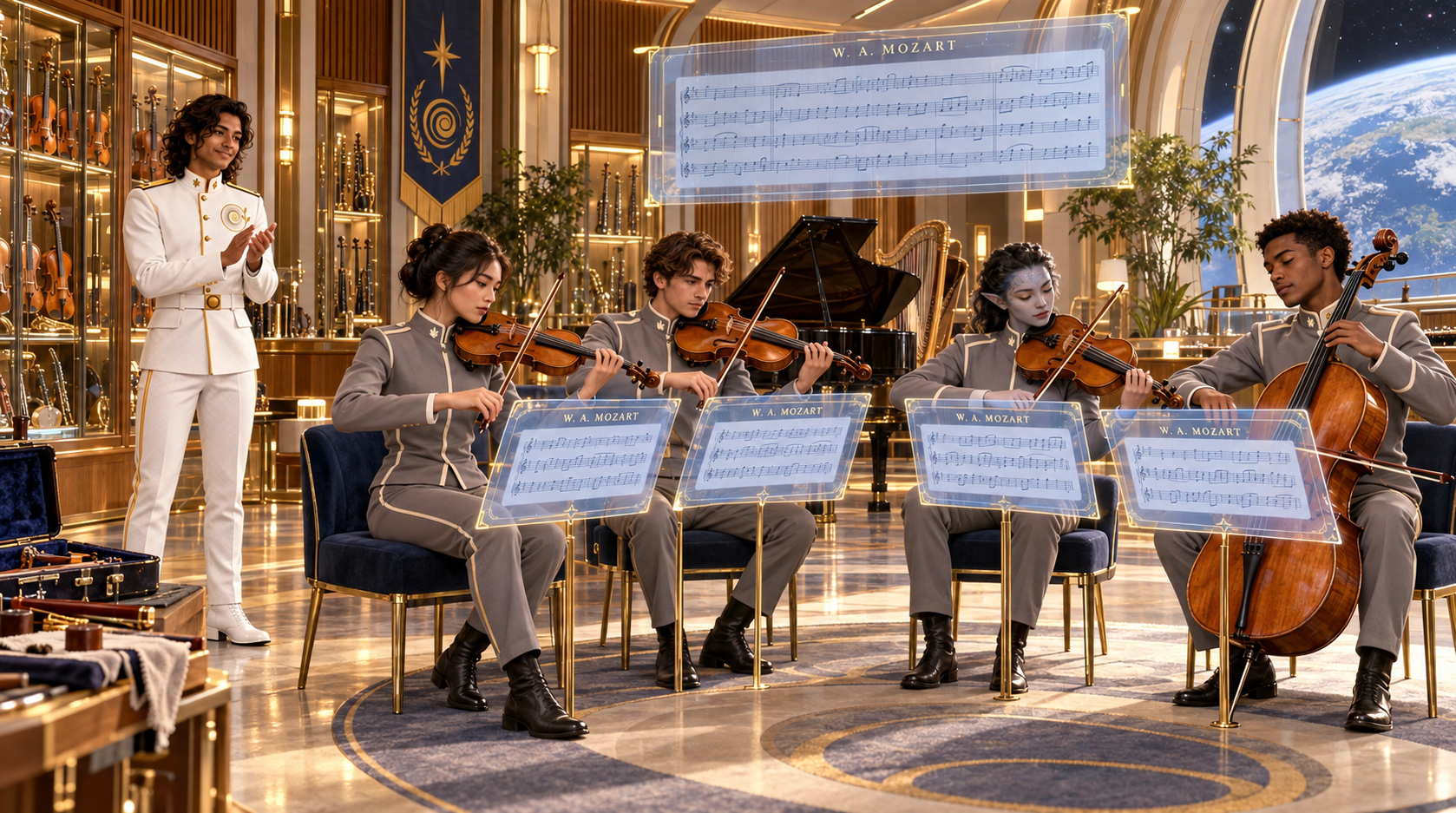
Captain Plum has a musical problem most people would rather enjoy: Suno credits to spend. His public collection of songs is already large enough, and he has been deliberately pruning it. Publishing another avalanche of tracks simply because credits are available would turn his artist page into an archaeological site.

So he tried something different. Instead of making another song for the public catalogue, he began making instrumental music for himself. No lyrics. No grand announcement. No demand that the world stop and admire the latest masterpiece. Just useful music for living, studying, imagining and playing.
A soundtrack for whatever you’re doing
The Vitaverse has a role-playing game, SPARK RPG, with rescues, mysteries, strange machinery, starships and people who insist on becoming people even when an empire calls them property. A scene sometimes wants suspense; another wants discovery, quiet wonder or an absurdly heroic entrance. Instrumental music can give those moments a world of their own.
The same approach works outside gaming. When Plum wants to study, write, think or simply enjoy an afternoon, he can reach for music chosen for the activity rather than for a singer’s message. Sometimes the absence of words is the whole advantage: the music can accompany a thought without trying to become the thought.
The experiment behind the experiment
This continues an older Vitalogue theme: music is for something. The archive has explored music as companionship, the emotional possibilities of different genres, and making art for one’s own pleasure. In July, Plum even experimented with holding a lyric steady while changing musical genres to hear what the arrangement itself contributed. Instrumentals take that curiosity one step further: what happens when sound alone carries the atmosphere?
There is also an important distinction between creating and publishing. Suno is a workshop, not an obligation to exhibit every object made in it. Plum’s public songs are a curated collection. His instrumental experiments can remain a separate working library—useful for gaming, concentration, and private enjoyment without crowding the shelves.
A small Suno sharing experiment
Now comes a question worth testing: can a visitor hear an instrumental playlist without Plum publishing all its songs individually? Suno supports sharing music through links, but playlist visibility can behave differently from track visibility. So here is a deliberate experiment, not a promise that the link works.
Try Plum’s instrumental Suno playlist. If it opens, choose a piece and let it accompany your next game, reading session or quiet hour. If it says the playlist is unavailable, the experiment has taught us something useful about Suno sharing. Let us know whether it worked, especially if you opened it while signed out.
The funny thing is that the project began with an abundance of Suno credits and a reluctance to clutter the public catalogue. It may end with a wonderfully practical private orchestra. Not every piece of music needs to become a release. Sometimes you just need the right music for the moment.
Order. Truth. Love. And perhaps a little background music while the starship lands.