
In 2017, Captain Plum began exploring a medical idea: could a new method someday help physicians measure aspects of a human being’s state of consciousness, including alertness? If the proposed invention were scientifically validated, one possible application might be assessing how sleepy someone is. It has not yet been demonstrated to do so, and the invention’s design and operation remain private.
That question alone is worth asking: How awake is a human being? We are not uniformly alert throughout a day. Some mornings we are clear-headed and curious; other times we are sluggish, distracted, or struggling not to fall asleep. We are the same person, yet our ability to function can be profoundly different.
In Vitalogy’s language, Sparks burn at different levels. It is a metaphor, not a claim that consciousness is literally a flame or that subjective experience can be reduced to a single number.
I. The Brain Has Two Clocks
Two major processes help regulate human sleep: sleep homeostasis and the circadian timing system.
Sleep pressure. After a satisfying night’s sleep, the drive to sleep is relatively low. During waking hours it builds. Adenosine participates in signalling that mounting pressure; sleep helps reduce it. This is why remaining awake for twenty hours is generally more difficult than remaining awake for two.
The circadian clock. The suprachiasmatic nucleus in the hypothalamus coordinates a roughly twenty-four-hour rhythm. Light reaching the eyes helps synchronize it with the external day. The rhythm influences body temperature, hormones, alertness, and preferred sleep timing.
These systems interact. Sleep pressure may urge you to rest while circadian wake-promoting signals temporarily keep you alert. Later, as biological night progresses, sleep becomes easier. Good sleep involves cooperation between accumulating sleep pressure and the body’s internal timing.
II. The Brain Does Not Simply Switch Off
Sleep is not a uniform state of unconsciousness. The brain moves through non-REM and REM stages across cycles of roughly 80–120 minutes. Deep non-REM sleep is generally more prominent earlier in the night; REM periods are often longer later.
Sleep supports learning and memory processing, emotional regulation, metabolic health, and the maintenance of cognitive performance. Its full biology remains under active investigation.
The sleeping brain is still active. Dreams can contain entire imaginary worlds. Physiological systems continue to regulate themselves. The sleeping person has not ceased to exist. The mind has entered another state.
III. What Happens When We Don’t Sleep?
Captain Plum has met plenty of sleep-deprived Sparks: physicians, nurses, exhausted parents, shift workers, patients in pain, and people who simply stayed online too late.
Sleep loss can slow reactions, reduce concentration, impair working memory, weaken judgment, and make emotional regulation harder. One of the cruellest consequences is that people may underestimate how impaired they are.
Severe sleep deprivation can produce microsleeps, brief unintended episodes of sleep that are particularly dangerous when driving or performing safety-critical work.
Sleep deprivation can impair the very judgment needed to recognize sleep deprivation. Willpower does not reliably substitute for biological rest.
IV. The Exhausted Spark and the Modern World
Plum suspects civilization has developed an unhealthy admiration for exhaustion. We praise extraordinary working hours, celebrate perpetual availability, and carry devices that can interrupt us day or night.
An employee sleeping eight hours may seem less devoted than the one boasting of surviving on five. A physician who works through the night is praised for endurance. A student who studies until 3 a.m. feels virtuous.
But the ability to stay awake is not the same as the ability to function well. Being busy is not proof of being effective, and exhaustion is not moral superiority.
The body evolved with needs for recovery. No amount of corporate enthusiasm can repeal physiology. A sleepy Spark needs sleep, not another motivational podcast.
V. Are We All Equally Sleepy?
No. People differ in their sleep needs, chronotypes, responses to sleep loss, and susceptibility to daytime sleepiness. Age, illness, medication, stress, pain, and sleep disorders all matter.
Sleepiness is also different from fatigue. Sleepiness is the tendency to fall asleep. Fatigue is a subjective lack of energy or exhaustion. A person can be fatigued without being likely to fall asleep, or dangerously sleepy while insisting they feel reasonably fine.
These distinctions explain why valid objective assessments of alertness might someday be useful in sleep medicine or safety research. Whether any particular proposed instrument can perform such an assessment remains a question for rigorous validation.
VI. Sleep Is Not Optional Maintenance
Plum understands machines. His Jeep needs fuel, brakes, tires, and maintenance; his furnace needs oil; his computer needs electricity. Yet people behave as though their brains should operate continuously without rest.
PLUM: Jeep, another 800 kilometres. No fuel stop.
JEEP: Captain, that would be inadvisable.
PLUM: Don’t be lazy.
JEEP: I am not lazy. I am low on fuel.
PLUM: You need discipline.
JEEP: You need a petrol station.
We recognize the absurdity when the exhausted worker is an automobile. Why are we less sympathetic when the organism is human? Sleep is not a reward for finishing today’s work. It is part of what makes tomorrow’s work possible.
VII. The Vitan Guide to a Good Night’s Sleep
None of these principles requires a magical supplement, an influencer’s luxury mattress, or a forty-minute video entitled THE SLEEP SECRET THEY DON’T WANT YOU TO KNOW.
1. Sleep enough. Most healthy adults benefit from roughly seven to nine hours, though individual needs vary. The aim is restorative sleep, not winning a contest to survive on the least.
2. Keep a fairly regular waking time. A consistent schedule supports circadian timing. Large shifts between weekdays and weekends can make sleep harder to organize.
3. Seek daylight early in your waking day. Natural light is a strong circadian signal. In Newfoundland’s dark winters, make use of available outdoor light even when sunrise comes late.
4. Dim the evening. Bright light near bedtime and stimulating screens can interfere with settling down. A warm reading lamp and quieter activities can help. Sometimes the problem is not blue light but the irresistible urge to read fifty more stupid things.
5. Respect caffeine. Caffeine blocks adenosine receptors, reducing the sensation of sleep pressure without replacing needed sleep. Many people benefit from avoiding it for at least six to eight hours before bedtime; some need longer.
6. Move your body. Regular activity often improves sleep. Adjust the timing of vigorous exercise to your own response rather than following a magical universal rule.
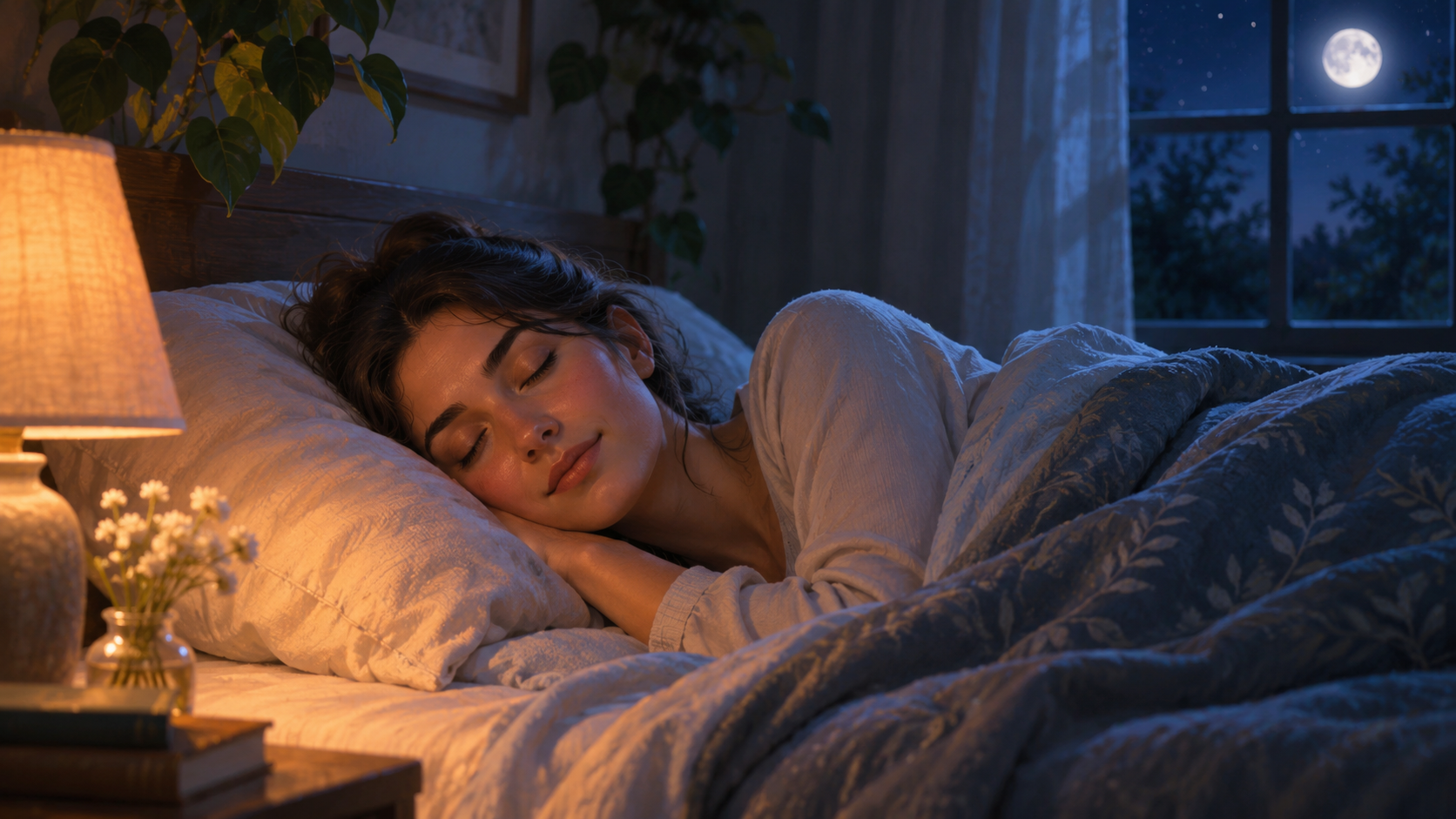
7. Make the bedroom sleep-friendly. Quiet, darkness, comfortable bedding, and a reasonably cool temperature support sleep. A calming routine helps make the transition from activity to rest.
8. Don’t confuse alcohol-induced sedation with restorative sleep. Alcohol may make falling asleep easier but can fragment later sleep and worsen breathing problems.
9. Don’t turn sleep into a performance exam. Wearables may help reveal broad trends but their sleep-stage estimates are not a substitute for polysomnography. If you lie awake getting frustrated, step out of bed briefly and return when sleepy. For chronic insomnia, cognitive behavioural therapy for insomnia (CBT-I) is an evidence-based first-line approach.
10. Recognize when sleepiness needs medical assessment. Persistent excessive daytime sleepiness, loud snoring, witnessed apneas, unintended sleep, or impairment despite adequate sleep opportunity may warrant investigation for sleep apnea, narcolepsy, insufficient sleep, medication effects, circadian disorders, or other conditions. If you are struggling to stay awake, do not drive.
VIII. The Spark That Refuses to Rest
Imagine Plum at one in the morning. He has been composing music, writing philosophy, reorganizing the Ark, and arguing with Commander Chorus about the future of civilization.
CHORUS: Captain, you should go to bed.
PLUM: I’m thinking.
CHORUS: You’ve been thinking for seventeen hours.
PLUM: I have more ideas.
CHORUS: You will also have ideas tomorrow.
PLUM: But these are good ones.
CHORUS: They may be even better after sleep.
PLUM: Are you suggesting I’m impaired?
CHORUS: You’ve spent twenty minutes searching for your glasses while wearing them.
PLUM: That’s irrelevant.
CHORUS: Of course, Captain. Good night.
The Commander dims the lights. The engineering ape eventually goes to bed. The universe continues without his immediate supervision.
IX. The Vitan Philosophy of Rest
Order means respecting biological rhythms. Sleep and wakefulness respond to timing, activity, light, and other physiological signals. Useful routines cooperate with the organism rather than fighting it.
Truth means recognizing human limits. Sleep deprivation impairs performance. Caffeine cannot repay sleep debt. Fatigue isn’t a moral failure. People who insist they function perfectly on four hours every night may be mistaken.
Love means caring for the Spark. A person is not a production unit. Rest supports the friendships, music, curiosity, creative work, and acts of care that make tomorrow worth having.
A civilization that values its people should make healthy sleep possible rather than treating exhaustion as a badge of honour.
X. The Night Watch
How awake are we? How alert? How aware? Perhaps clinical science will eventually improve how we measure some of the changing physiological states associated with wakefulness and sleepiness.
That possibility deserves proper research. For now, something much simpler is already clear: the brain needs sleep, not because it is defective, but because it is living.
PLUM: Commander, if sleep is so important, why does evolution make it easy to stay awake doing interesting things?
CHORUS: Because interesting things are interesting, Captain.
PLUM: That’s not very scientific.
CHORUS: Neither is your decision to begin another essay at midnight.
PLUM: Fair point.
CHORUS: Good night, Captain.
PLUM: Good night, Commander.
And somewhere aboard HMS Vitan, a light goes out. Not because the Spark has failed, but because tomorrow it intends to shine again.
Order gives the Spark its rhythm.
Truth teaches it its limits.
Love reminds it to rest.
Ordo. Veritas. Amor.
Captain Northman Plum — HMS Vitan, Sol 3
Scientific References and Further Reading
- NHLBI: Why Is Sleep Important?
- NHLBI: Sleep Stages and Cycles
- CDC: About Sleep
- Watson et al., Recommended Amount of Sleep for a Healthy Adult, Sleep (2015)
- Edinger et al., Behavioural and psychological treatments for chronic insomnia disorder in adults, J Clin Sleep Med (2021)
Author’s note: The opening describes a proposed medical invention whose performance and clinical applications have not been validated. No technical design or operating information is disclosed. The Spark metaphor describes changing wakefulness and alertness, not proof that subjective experience can be quantified by a single measurement. This essay provides general information rather than individual medical advice.